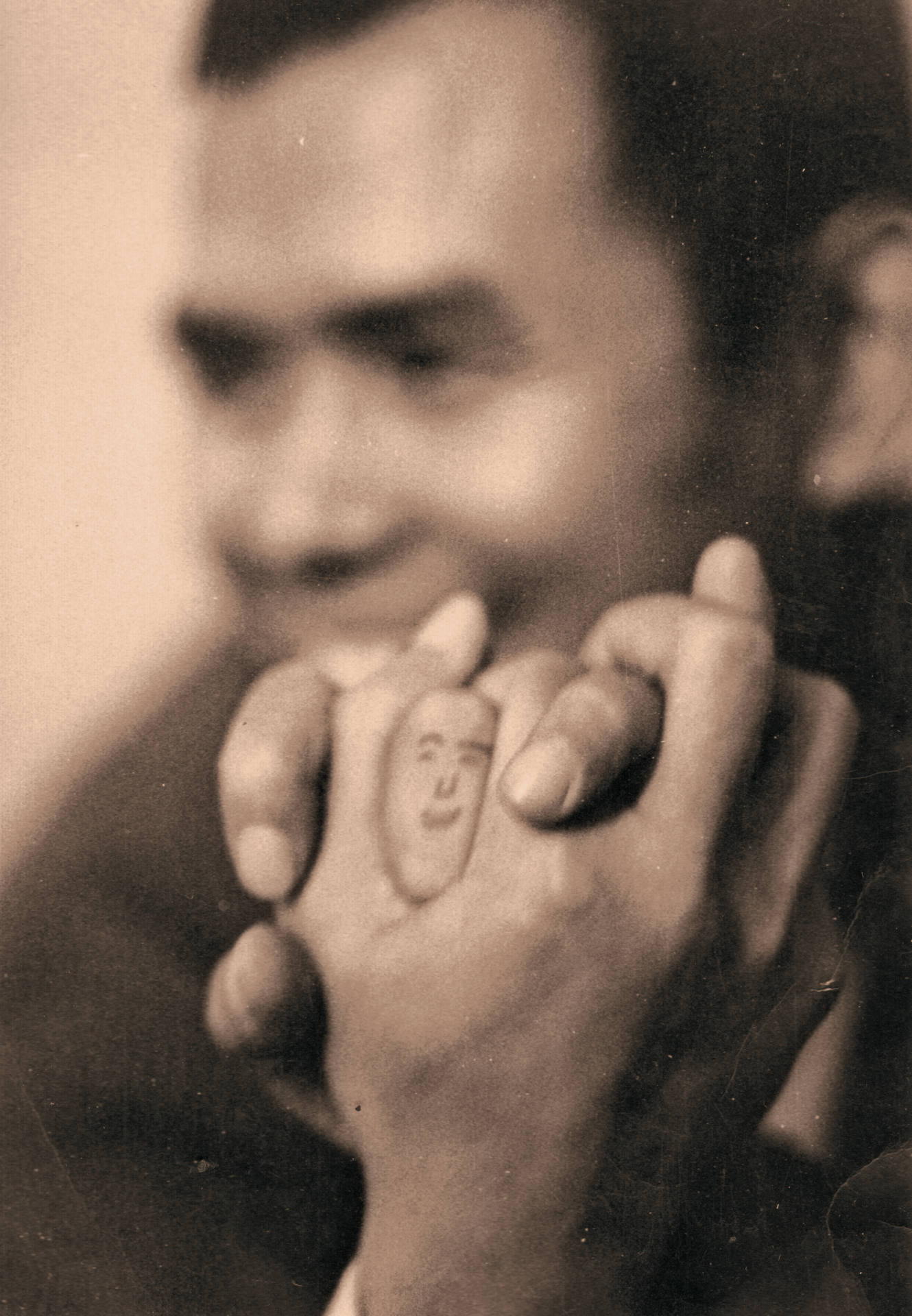
In this article—which appears as it was originally published in the college newsletter, The Seminarian—Thích Nhất Hạnh shares about his life at Princeton Theological Seminary, where he was known by his birth name, Nguyễn Xuân Bảo.
(Nguyen Xuan Bao has kindly consented to write this article concerning some of his personal reflections on his life at the seminary. Mr. Bao is studying Islam here this year, having come from Vietnam where he attended a Quang Buddhist Institute in Saigon.
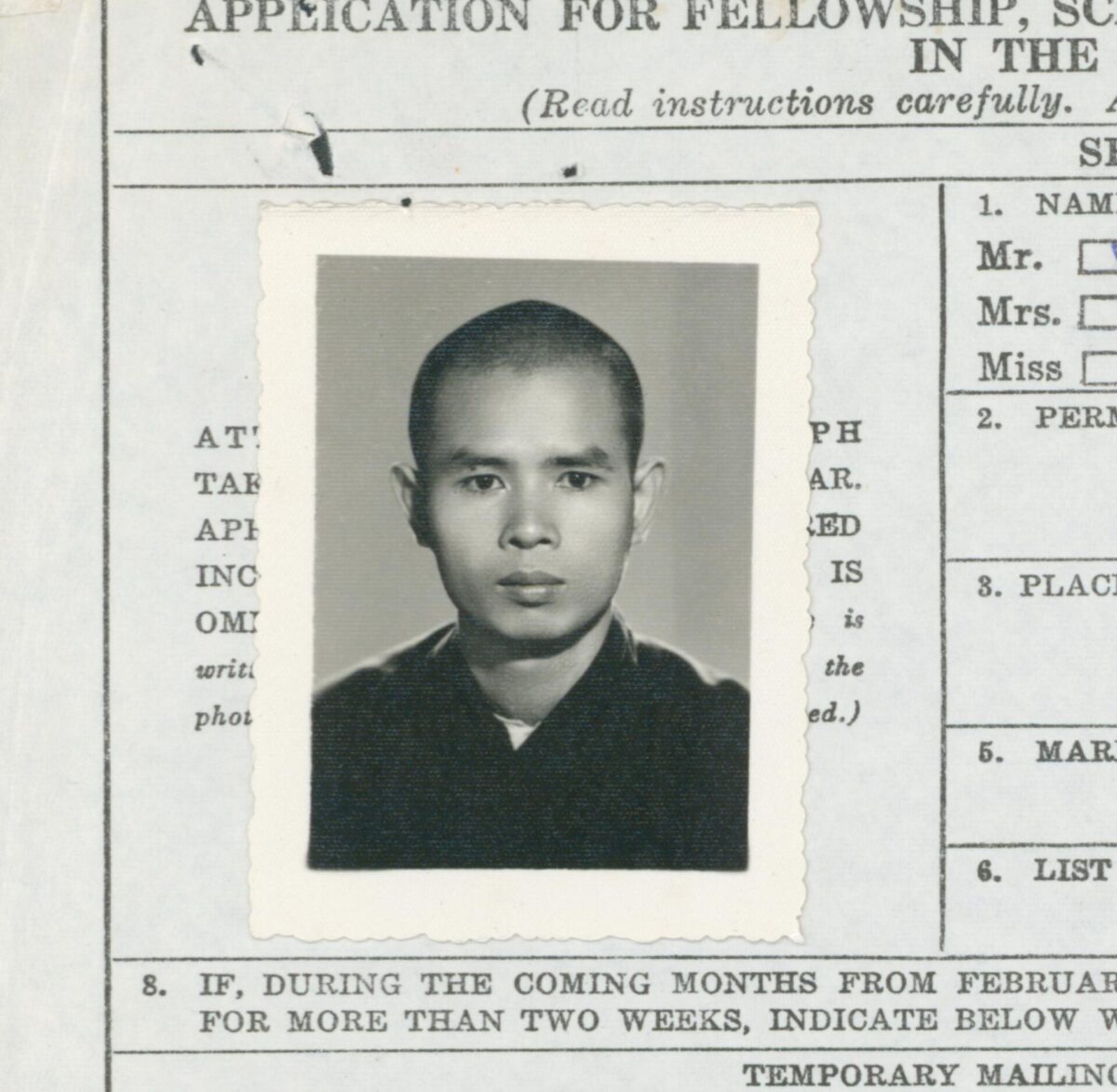
In this article—which appears as it was originally published in the college newsletter, The Seminarian—Thích Nhất Hạnh shares about his life at Princeton Theological Seminary, where he was known by his birth name, Nguyễn Xuân Bảo.
(Nguyen Xuan Bao has kindly consented to write this article concerning some of his personal reflections on his life at the seminary. Mr. Bao is studying Islam here this year, having come from Vietnam where he attended a Quang Buddhist Institute in Saigon. He himself is a Buddhist.)
By Nguyen Xuan Bao
My impressions and feelings about life in seminary, and in an article for The Seminarian? That’s a big idea, isn’t that?
My sojourn in Princeton is about to end, but I begin now to love Princeton and I hate to leave it so soon. What a good place to study religion! Wonderful library, famous teachers, nice fellow-students. Princeton—especially in autumn with its religious atmosphere, its serenity, its beautiful maples—makes me think of the beauty of classic Chinese poetry. It took me a long time to love Princeton and to adapt to the new mode of life here. I had to learn to walk quickly—sometimes I have to run—to read quickly, to eat quickly, to do everything quickly, to smile all the time, to say “good morning,” “how are you today?,” to express friendliness the most open way possible, to sleep and meditate in noises. Perhaps you think that these are the easiest things on earth one can do; but they have really been difficult for me.
In a Buddhist monastery, people have the habit of doing things quietly, slowly, serenely; a Zen student is expected to be conscious of all his acts. You cannot do things in the same way here. Coming down the stairs you must jump three steps a time; walking on campus you must hurry up if you don’t want to be a barrier for the others, if you don’t want to be late for dinner. In a Buddhist monastery we meet each other with our hands joined before our chest and with a quiet smile. If my friend has done a service for me, a smile would be enough for thanks; a “thank you a lot” or a “it is very nice of you” risks to be ungrateful—sometimes insincere—and risks reducing the service to zero.
Here, things are different. “Thank you” and “excuse me” must be said several times a day. Meditation in noises is almost impossible; I can not be a “good Zenist” at all in a dormitory. Everybody can sleep in noises, I think, “Why can’t I?” So I have tried, and I can. But I have to confess that Christmas has been a real vacation for me. I did not go anywhere and was very content with the quiet campus.
In a Buddhist institute, you must be “afraid” of your teacher; you are expected to stand up and be silent when he comes in. You must show great respect for him. He is expected to teach not only by his lectures but by his way of working, eating, sleeping, living as well. Most of the Buddhist teachers live on campus. You can’t graduate unless you behave properly as a good Zen student. Students do love their teachers—their masters—but they are “afraid” of them.
A student from the graduate school asked me after the lecture: “How can you remain motionless during three consecutive hours like that when everybody keeps jumping up and down and keeps changing his position?” I was really surprised when I first saw a student putting his legs on the table and smoking a pipe during the seminar. But now, I think that it is “normal.” The professor doesn’t mind things like that; his duty is only to give the lecture. In a Buddhist institute, a prayer is said before and after class; during the class, students must be in the “garde-à-vous” position.
I just mention the differences, I don’t say what is good, what is bad. I don’t say that silence and fear of the professors are good. What is good here can be considered as bad there, and vice versa.
The best way to study a religion is to be in the place where people are devoutly studying and practicing it. I feel that by attending church services, by living with Protestant families and by talking with theological students, I can see something very existential (I am using Tillich’s word, you know!), things that one can’t find in theological books.
What makes me happy is the fact that I have met several students who can discuss religion with an open mind. But I still feel that sometimes we don’t understand each other very well, just because the ways of thinking and reasoning are different; perhaps my friends have based their thinking so much on formal logic. Nevertheless, discussions have been sometimes very exciting, especially on comparative religion. A “Buddhist interpretation of the gospel of John” or a “Zen reflexion on Tillich,” for instance, can be a very good subject for endless discussions.
As Zenists, people can see the Buddha-nature everywhere, even in flowers, clouds, mountains, trees; we see in everybody a Buddha-to-be … why can’t I say that Princeton is a “pure land” of Prajna? Truth reveals itself in several forms and transcends them all. Why can’t I see in theological professors and students my dearest friends in the Dharma whom I love with a love which “bears all things, believes all things, hopes all things, endures all things?” But, as I have told you, my sojourn in Princeton is about to end ...
Originally published in The Seminarian: Sesquicentennial Issue, V 12, no 27, April 23, 1962. Reprinted with permission from the Special Collections and Archives at Princeton Theological Seminary.