Living harmoniously with people who have different political and spiritual values
By Như-Mai Nguyễn on
When people in the mindfulness community hear I’m from Texas, there’s often an immediate reaction—raised eyebrows, sympathetic smiles, or comments about how difficult it must be to live in a “deep red” state. As a liberal, Buddhist, Vietnamese American from immigrant parents, I felt the weight of growing up in a place that can seem so divided,
Living harmoniously with people who have different political and spiritual values
By Như-Mai Nguyễn on
When people in the mindfulness community hear I’m from Texas, there’s often an immediate reaction—raised eyebrows, sympathetic smiles, or comments about how difficult it must be to live in a “deep red” state. As a liberal, Buddhist, Vietnamese American from immigrant parents, I felt the weight of growing up in a place that can seem so divided, a place where literal walls were built to keep people out and where I sometimes wondered if I truly belonged. I worried about whether neighbors would see me as an outsider, or whether political and spiritual differences might become barriers to safety and trust. And yet, my practice teaches me to look again. Each time I open my heart a little wider, I discover that people are never just the signs in their yard or the labels we attach to them. Living in Texas continues to show me that beneath our differences, kindness, connection, and care are always available when I am willing to look more deeply.
Meeting the neighbor with the Trump flag
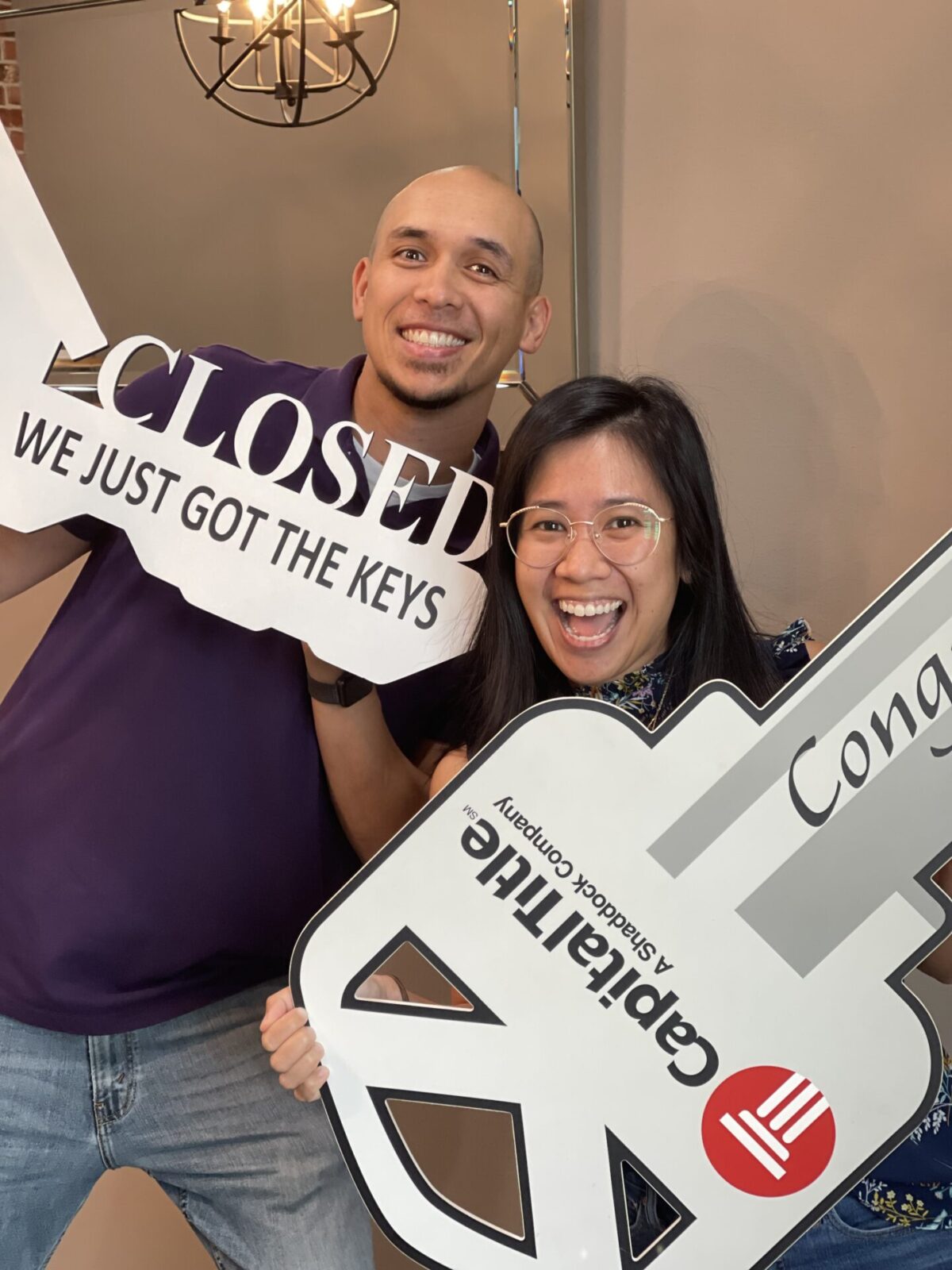
In 2022, my husband and I moved into a quiet neighborhood in the suburbs of Houston. We were thrilled about our new home, but I couldn’t help feeling nervous about how we’d get along with our neighbors. The neighborhood was predominantly white, and just a few houses down, a Trump flag hung prominently in the front yard. At the time, the Trump administration had publicly blamed COVID on China, and many Asian Americans had faced hate crimes as a result.
A few days after our move, we were outside tending the front yard when an older white gentleman slowed his car in front of our house. As he rolled down his window, I braced myself for some kind of aggressive speech. Instead, he greeted us with a bright smile, introduced himself warmly, and welcomed us to the neighborhood. He assured us, “We take care of each other here.” He even told us to stop by his house any time if we needed to borrow tools. Then, as if to seal the welcome, he handed us a bundle of fresh strawberries he had grown in his backyard. His kindness and heartfelt gesture touched us deeply.
He drove off, and while my husband and I discussed how grateful we felt for such a warm welcome, we noticed which driveway our new neighbor had pulled into. To our surprise, it was the house with the Trump flag. We looked at each other in disbelief. The man we had been so wary of had just offered us the warmest welcome we could have hoped for as new homeowners.
Eleanor, my kindred spirit
We have another neighbor, Eleanor, who lives right across the street. She is one of the friendliest and most spunky women we’ve ever met. When we first met her, she had purple-dyed hair, proudly told us she went to yoga every day, and laughed as she shared that she went skydiving for her 80th birthday. She was curious when she found out we like to meditate and said she also tries to meditate ten minutes a day.
Over the years, we’ve helped each other in small but meaningful ways. When a hurricane swept through Houston and knocked out power across the city, Eleanor invited us over to charge our devices using her generator. When she had hip surgery, I brought over sweets and treats to lift her spirits. When we traveled, she kept an eye on our lawn, and when she went away, we looked after her packages. We often texted each other how much we appreciated being neighbors. I felt like we were kindred spirits.
But during the 2024 elections, I was caught off guard. One day, I noticed a Trump sign planted firmly in Eleanor’s yard. At first, I couldn’t believe it. No way—that couldn’t be our Eleanor. We were kindred spirits! How could she have such a different political orientation from me? But it was her sign, and the truth settled in: she identified as deeply conservative.
My first reaction was to pull back, to distance myself, and to wonder if she was unsafe. But my practice with The Fourteen Mindfulness Trainings—especially openness and freedom of thought—reminded me Eleanor was allowed to have her own beliefs. She was so much more than her political leanings. I thought about the woman I knew: a faithful churchgoer, a steady volunteer at the Salvation Army, and above all, a genuinely caring person. She surely had reasons for her stance and saw something I did not.
So instead of closing the door, I opened one. I invited her over for lunch. We had never shared a meal together, so I welcomed her and another neighbor into our home. Inviting someone into our home was such a vulnerable way of revealing myself to Eleanor, and I was nervous that she would judge me when she saw the quotes from Thầy posted around our home. But Eleanor continued to be open and our interactions felt natural: around the table we shared food, conversation, and laughter. It was a simple reminder that connection can be larger than our differences.
Family Bonds Across Spiritual Divides
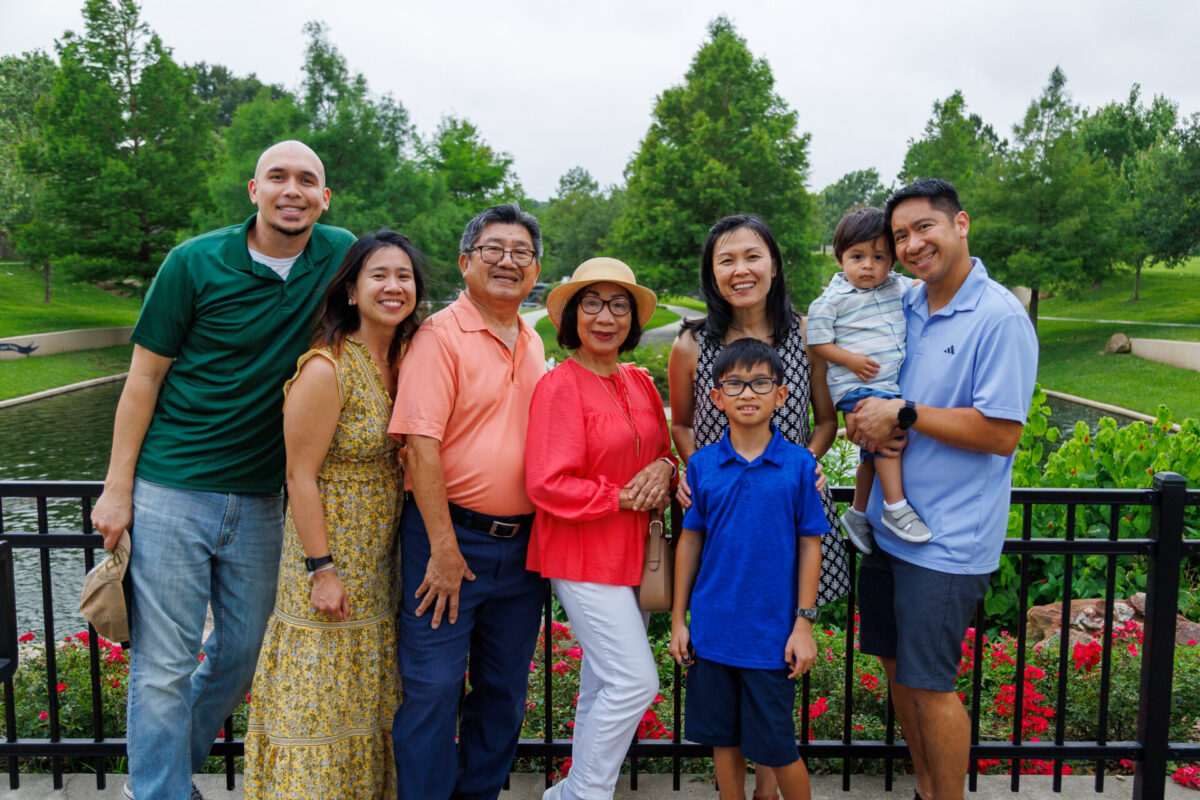
Though practicing openness with neighbors was challenging, doing so with family has been even more tender. My brother and I are polar opposites politically, but the deeper source of tension between us has been around spirituality. Though we were raised Buddhist, my brother converted to Christianity when he was in college. In the beginning, he was quite dogmatic in his faith. He stopped attending temple with us, refused to bow at our ancestral altar, and often spoke about his spiritual duty to convert my parents and me. At times, this created painful distance. More than once, he expressed sorrow that we were not Christian and told me that when Judgment Day came, we would not be able to join him in heaven. The first time he said this, I was deeply offended and hurt that my own brother could believe that I, and our parents, were destined for hell.
Despite these differences, we remained committed to staying together as a family. My brother, my parents, and I all live within a ten-minute drive of one another. We gather for family dinners about twice a month, where we laugh, talk about work, and try to show our love the best we can. And yet, beneath the closeness, I felt a subtle emotional distance from my brother.
In an effort to bridge that gap, I began attending his Friday night house church. Each week, about a dozen people gather to eat dinner, read scripture, pray, and share about their lives. During the circle time—so reminiscent of Dharma sharing—I listened to my brother open up about his struggles and his worries, and I felt us connecting on a more genuine level. I don’t go because I share his faith (though I remain open to Christianity), but because I want to understand him more deeply, to step into his world, and to let him know I love and support him. Sitting in that circle, I felt both our differences and our connection.
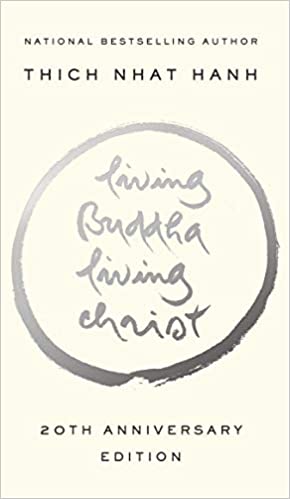
After a few years of occasionally attending his house church, my brother surprised me. One day he asked to borrow my copy of Thầy’s Living Buddha, Living Christ. I lent it to him, and although he never shared his thoughts on the book, his curiosity felt significant. Now, whenever he expresses sorrow that I am not Christian, I hear it differently. What once felt like judgment now feels more like yearning—a longing to feel closer to me, and a desire to offer what he believes to be the greatest joy and protection.
Building Bridges with Connection
These moments with my neighbors and my brother continue to teach me that connection can be larger than our differences. Each time I’ve chosen to stay, to listen, to share food, prayer, or a simple smile, something has shifted in me. What once felt like judgment reveals itself as love in a different language. What once looked like opposition becomes an opening for kindness. My practice does not erase the differences that exist between us, but it helps me hold them with spaciousness. In doing so, I touch a deeper truth: our humanity is never contained by a sign in the yard or a label we carry. It is revealed in the ways we keep showing up for one another.