For UK Black History Month—called Our History Month in honour of Professor Jason Arday
I am sitting in South Africa feeling the aftermath of violent xenophobic attacks around me. Africans who have lived here for years are being attacked, threatened, displaced, and told to leave. I notice a tightening in my body, a heightened alertness to movement outside my window.
I am watching versions of this elsewhere too—in Britain,
For UK Black History Month—called Our History Month in honour of Professor Jason Arday
I am sitting in South Africa feeling the aftermath of violent xenophobic attacks around me. Africans who have lived here for years are being attacked, threatened, displaced, and told to leave. I notice a tightening in my body, a heightened alertness to movement outside my window.
I am watching versions of this elsewhere too—in Britain, the United States, and across Europe: people with relatively little power made to carry fears and failures rooted elsewhere because it is easier to offer someone vulnerable to blame than disturb the conditions from which suffering has grown.
The neighbour becomes the migrant. The shopkeeper becomes the problem. The family down the road becomes part of an invasion.
Fear acquires an address.
From South Africa, I have also been trying to process what happened to Professor Jason Arday in Britain, and his death soon afterwards.
Arday had been celebrated as Cambridge’s youngest Black professor, his rise held up as evidence of progress. Then Nathan Cofnas¹ made plagiarism and other allegations against him. Scrutiny spread into Arday’s thesis, biography, credentials, and appointments, despite an earlier Liverpool John Moores University investigation not upholding allegations of plagiarism.
Also at Cambridge, the historian William O’Reilly was found to have plagiarised more than twelve pages of a student’s work yet remained in his post.² Why do some allegations remain attached to an act, while others expand until a person’s legitimacy and right to belong are being judged?
Somewhere in the frenzy, the human being—husband, father, son, brother, and friend—became harder to see.
And the feeling I keep returning to is rage.
Not only grief. Rage.
The trembling runs through my whole body, tears of grief and anger so entangled that I cannot separate one from the other. I know, too, the caution that comes with naming rage, and the exhaustion of measuring how much of what you feel can be shown.
Rage at how readily pain created by systems is turned against people; at how those living with insecurity can be persuaded that somebody with even less security is the threat; at how a Black person can be celebrated as proof of progress and become expendable when their presence no longer reassures the established order.
But my rage is also directed at what these systems do between us. Sometimes we remain silent while another person is being torn apart, and sometimes we help with the tearing.
What happens when a human being becomes the place where a collective puts what it cannot bear to examine in itself?
Feeding the hungry ghost
There is a Buddhist image that comes to mind: the hungry ghost, a being whose enormous hunger can never be satisfied. I have begun to wonder about hungry ghosts not only as states of individual consciousness but as something we can create collectively.
Societies can hunger for security, institutions for legitimacy, communities for reassurance that they are good and inclusive. We too can hunger for belonging or recognition. When that hunger remains unexamined, we can begin to look for someone to satisfy it.
And sometimes, rather than looking into the hunger and the pain beneath it, we feed it an Other.
The migrant can be made to carry conditions they did not create. In sanghas, the practitioner whose suffering unsettles the appearance of harmony can gradually become the problem.
There is something sacrificial in this pattern. I do not mean these experiences are equivalent, but they show the role a human being can be made to play in carrying what a group will not face.
If that person can be blamed, discredited, or allowed to disappear, the tension may ease while the conditions remain. The hungry ghost is still hungry. Sooner or later, another “Other” is required.
What does it mean to look deeply?
Institutions hold inquiries and commission reviews, and promise to learn. Sanghas may apologise, practise Beginning Anew, and reach for the language of deep listening. But we can look without looking deeply. The appearance of response can itself become a way of avoiding repair.
In our practice, we can also be quick to think anger needs to be transformed into peace, compassion, and love. We do not want rage to harden into hatred. But there are times when it needs somewhere it does not first have to be softened or explained in order to be received.
Writing about Black British history, Professor Arday called for “all our histories as British citizens” to be included.³ History shapes who we understand to belong, whose suffering matters and what we owe one another.
Thích Nhất Hạnh⁴ taught us to look into causes and conditions. Suffering does not arise by itself. So the visible incident cannot be the whole inquiry. What had been watered before the rupture? Whose authority shaped what was believed? Whose competence was assumed and whose was doubted?
Some of those assumptions have a long inheritance. The British historic insignia of the Order of St. Michael and St. George depicted a white St. Michael with his foot on the neck of a black-skinned Satan.⁵ The design was changed in 2011, but changing an image does not by itself transform the inheritance beneath it. The histories and structures that taught us whom to associate with authority, virtue, and danger can continue to shape how we see—who appears naturally credible or good, and who arrives already under suspicion.
And do versions of this operate in our sanghas too? Who receives the presumption of goodness? Whose mistakes remain mistakes—and who enters a difficulty already presumed to be the problem?
Communities water seeds through what they repeat, reward, protect, or leave unchallenged. If I receive the nourishment of a community, I also participate in what it permits. Responsibility is not equal, but concern with our own goodness cannot displace the person who has been hurt.
I know the loneliness of naming racism and sexism and finding that the person raising the difficulty becomes easier to dismiss than the structure being questioned.
I remember one sangha organisational meeting in which I questioned options being proposed and offered alternatives based on community-building approaches I had used successfully elsewhere. At one point I was told, “Maybe your experience isn’t relevant here.”
I felt the heat rise in my body and my fingers tighten. Almost immediately I began curating myself: soften your tone, choose your phrasing carefully, do not appear reactive. I knew how quickly a Black woman’s anger could become the problem rather than what had caused it.
My practice itself became part of the group’s scrutiny: was I calm enough, compassionate enough, understanding enough? Was I now the one disturbing harmony? The structure I had questioned receded from view as attention shifted towards whether I was practising correctly.
I could feel the problem in the room becoming me. Dharma language that might have helped us examine power was instead being used to contain the challenge to it. I watched myself fold. I backed down.
No sangha exists beyond the society in which it practises. Communities that speak beautifully about compassion and inclusion can still reproduce the patterns they hope to transform. Compassion can soften what happened; harmony can become something to restore rather than something to examine.
This is where the notion of imperfect sangha matters to me. Imperfection should deepen the inquiry, not close or excuse it. Without repair, imperfection becomes repetition.
Inclusion cannot end with invitation, ongoing consultation, or the creation of inclusion forums and groups. These spaces may matter, but they can make us feel something is being addressed while deflecting attention from the more difficult work of looking deeply towards repair. They too can reproduce boundaries around who belongs, who is invited and whose voices are heard. When conflict arises, who is protected, and who is left carrying its cost? What does it mean, then, to call sangha a refuge?
From seeing to solidarity
Deep looking becomes practice when what we see changes how we act.
Repair is not punishment or a search for someone else to sacrifice. It asks how conditions can change so that the same suffering does not simply find another person through whom to repeat itself. Sometimes it is as simple, and as difficult, as refusing to leave somebody alone with the wound.
Much collective harm is built incrementally: a concern minimised, a stereotype left unchallenged, someone described as difficult until others begin to see them that way. The practice begins before catastrophe.
Expressions of grief, care, and love matter, but they are not the same as solidarity. Solidarity asks something of us while there may still be a cost to standing beside someone.
Love that does not interrupt the public destruction of another human being is not enough. Nor is love that asks the wounded person to be more understanding or forgiving while leaving the structure that wounded them untouched.
Those of us who know something of marginalisation are not exempt. We may speak of solidarity when it affirms who we understand ourselves to be, yet withdraw when it threatens our own access or reputation.
Solidarity begins in a harder place: refusing to secure our own peace, safety, or belonging at somebody else’s expense.
Who is being centred by my response, and what does my response cost me?
The Buddhist commitment to non-harming asks more than whether we personally struck the blow. It asks whether we saw what was gathering around another person and whether we were willing to stand beside them while there was still time to make another ending possible.
Perhaps the question is not whether harmony matters, but what kind of harmony we are seeking.
I have been thinking about the Vietnamese word hòa. Thích Nhất Hạnh taught that the essence of sangha is hòa: peace, togetherness, and concord. He spoke of practising this through the Six Harmonies, Lục Hòa Kính, with kính carrying the spirit of reverence and mutual respect.⁶ One of these stays with me: harmony of ideas, which I understand as loosening our attachment to our own ideas.
That practice matters, and it needs care when we bring it into moments of difficulty. “Let go of your view for the sake of harmony” is easily said to the person naming harm. But if loosening our attachment to ideas is a practice for all of us, it must also include the community’s attachment to the belief that, because we are a Buddhist community, we are already compassionate, harmonious, and non-harming.
Without reducing a cultural inheritance I am still learning to understand, I wonder whether deeper harmony is not the absence of disagreement but the capacity to remain in relationship when disagreement becomes uncomfortable. It may ask us to remain present when anger enters the room without immediately trying to remove it; to listen for what the anger is protecting; and to allow truth to disturb an apparent peace when that disturbance is necessary for repair.
This does not mean allowing anger to become consuming or to fix another person in a single role. Nor does letting go mean requiring anger to disappear before its causes have been understood. Anger, too, can be held with mindfulness: neither suppressed nor obeyed, but listened to deeply enough to reveal what has been wounded.

Bringing it home
South Africa’s liberation was never made by South Africans alone. Neighbouring countries sheltered exiles and endured real cost because they refused to regard apartheid as somebody else’s problem.
That history creates no debt migrants must invoke in order to deserve dignity. But the forgetting matters. We were once held by solidarities that crossed borders; now people from some of those same regions are being made into the problem.
My rage is not the opposite of love. Right now, it may be the form love takes when it refuses to look away.
The practice is not to remain inside the rage forever, but to listen deeply enough to discover what love is asking me to protect, repair, or change, and to notice the hunger before somebody else is made to bear its cost.
What would it mean to see the hungry ghost in our sanghas before another human being is offered to it?
- Inaya FolarinIman, “Jason Arday, Cambridge’s youngest Black professor, resigns amid plagiarism allegations,” CBS News, 6 August 2026; Ian Pace, “Raging against media scrutiny looks like academic self-interest,” Times Higher Education, 15 September 2026 (opinion).
- Erik Olsson, “Plagiarising professor stays in post and threatens student journalists,” Varsity, 29 September 2023.
- Jason Arday, “Black British History in the National Curriculum,” The Black Curriculum, 2021. See especially the discussion of an inclusive curriculum encompassing “all our histories as British citizens.”
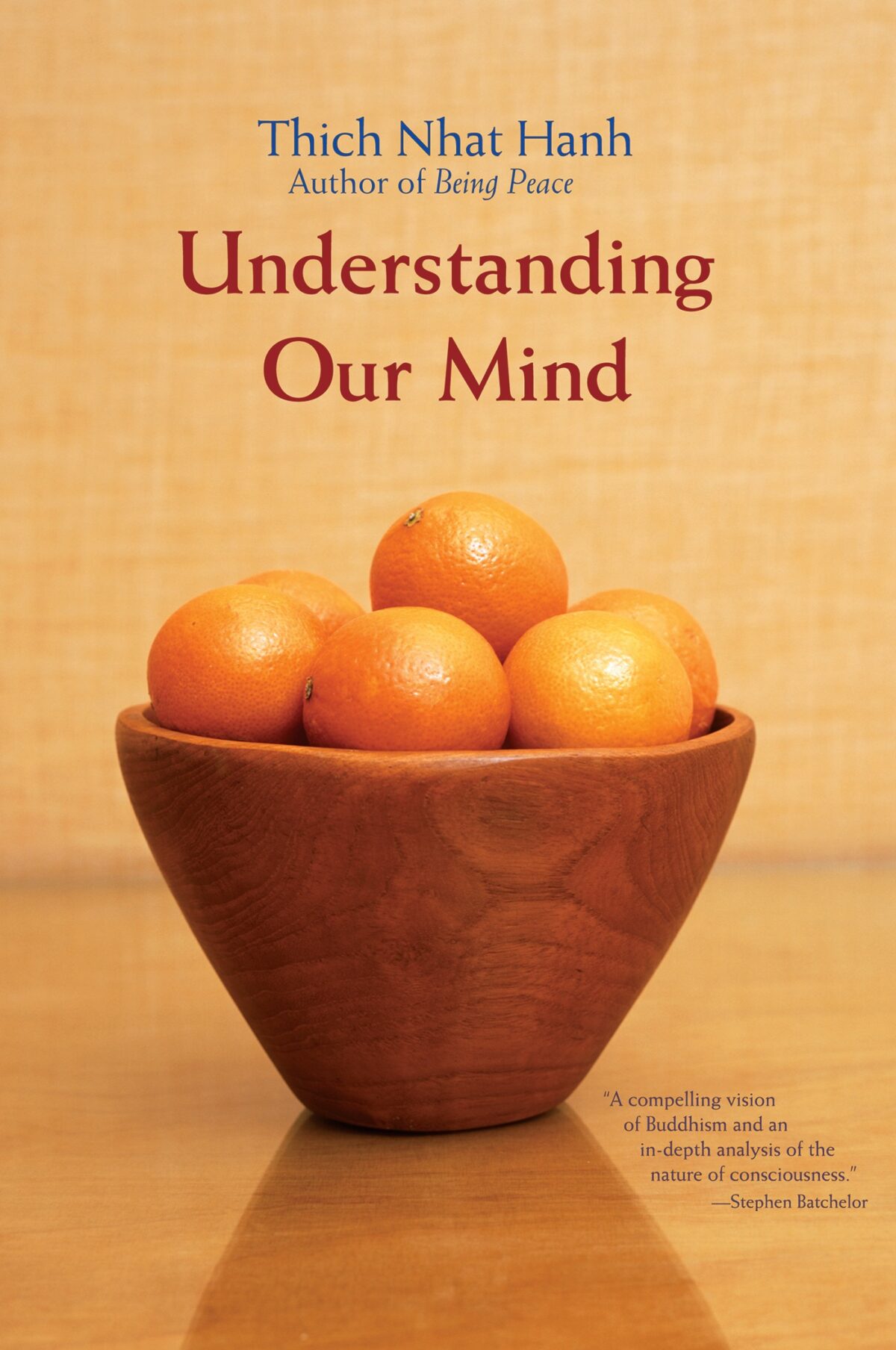
- Thích Nhất Hạnh, Understanding Our Mind: 50 Verses on Buddhist Psychology. Berkeley: Parallax Press, 2006.
- “GG to seek review of insignia depicting black man as Satan.” Jamaica Gleaner, 24 June 2020; The Most Distinguished Order of Saint Michael and Saint George: Annual Report January 2019–March 2021, Central Chancery of the Orders of Knighthood. The latter records concerns related to older versions of the insignia and that the pictorial detail had been redesigned in 2011.
- Thích Nhất Hạnh, “Taking Refuge in the Sangha,” Dharma talk, Lower Hamlet, Plum Village, 13 January 2000, Plum Village. The talk on the Six Harmonies.