By rehena Harilall on
rehena Harilall reflects on mindfulness, solidarity, and practice from her journey across the West Bank.
In April 2025, I traveled to the occupied West Bank to stand beside Issa Souf as the Garden of Hope opened its doors. Four years earlier, on Nelson Mandela Day in 2021, we had met over Zoom—me in London and him in his village in the West Bank.
By rehena Harilall on
rehena Harilall reflects on mindfulness, solidarity, and practice from her journey across the West Bank.
In April 2025, I traveled to the occupied West Bank to stand beside Issa Souf as the Garden of Hope opened its doors. Four years earlier, on Nelson Mandela Day in 2021, we had met over Zoom—me in London and him in his village in the West Bank. Paraplegic since Israeli soldiers shot him with illegal dumdum bullets in 2001, he spoke quietly about his dream: a center for mindfulness and healing in the occupied West Bank, Palestine—a place where people could breathe, rest, and remember their humanity amid daily violence.
Growing up Black under apartheid in South Africa, I recognized in his voice the quiet determination of those who refuse to let oppression define them—the steady practice of staying human in systems designed to break them. His words pierced my heart. I vowed I would help realize his vision.
In the years that followed, I supported the Garden as a sangha member and friend, helping to raise funds and stand in solidarity. When it opened, I traveled to be present for that moment—and then began to move through the land that held it.
Thích Nhất Hạnh taught understanding and love are not separate; when we truly understand, we cannot help but love—and love naturally expresses itself in action. For me, that understanding was forged in apartheid—the knowing that peace without justice is incomplete.
South Africa’s solidarity with Palestine is rooted in a shared experience of oppression and recognition that our liberation is bound up with all who still seek theirs. In 1995, recognizing the State of Palestine was one of our new democracy’s first acts, an acknowledgment between peoples who know what it means to live under systems that deny your humanity.
The Garden of Hope: Issa’s vision made real
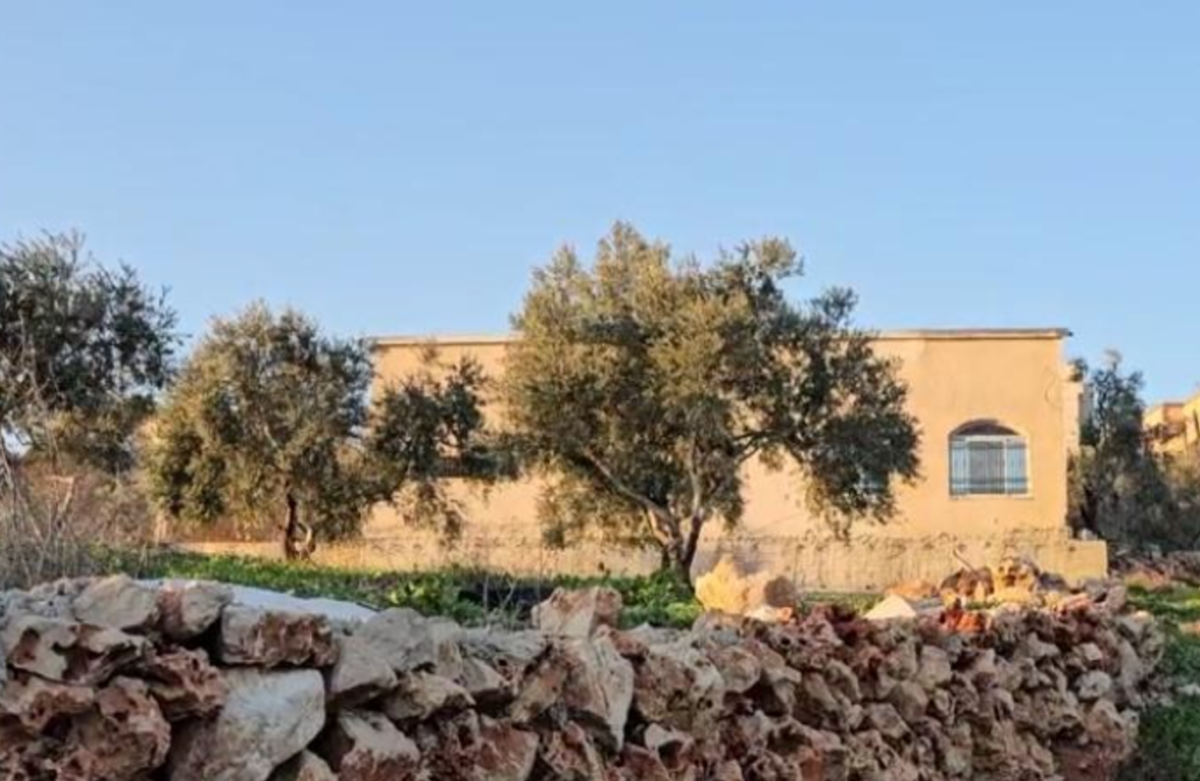
In the village of Hares, Issa’s vision took physical form in the Garden of Hope (GoH)—the first mindfulness center in occupied Palestine built in the Plum Village tradition. The Garden of Hope exists in the shadow of impermanence made concrete: built in Area C, where every Palestinian structure faces the threat of demolition at any moment. Across from it looms Ariel, one of the largest Israeli settlements—a daily reminder that even this space for breathing, for healing, for being human, could be erased tomorrow. Here, impermanence is not abstract. Impermanence is waking each morning uncertain if your home will stand by evening, planting a garden knowing it may be bulldozed. Impermanence is the lived reality of occupation.
Yet, from this fragile ground, the GoH rose—brick by brick—a living testament to interconnection, built through the energy and commitment of Palestinians, and the support of international Buddhist practitioners, Israeli activists, and sangha members. The center reminds us no one exists alone. Even within this system compassion can connect us beyond walls and borders.
To practice mindfulness under these conditions is not a retreat from struggle. It is choosing awareness when others choose fear. It is what Thích Nhất Hạnh embodied during the war in Vietnam: practicing peace in the midst of violence.
Issa himself embodies this practice. Rooted in Islam and practicing engaged Buddhism in the Plum Village tradition—a two-time visitor to Plum Village, France—he weaves these paths together, drawing strength from both. When I visited, he spoke of empathy not only for the oppressed, but for the oppressors.
“They are victims too,” he said quietly, gesturing toward a distant checkpoint. “Young men sitting for hours with rifles, sweating under the sun. Afraid, unable to sleep, believing they are protecting or fighting something that can only be protected by love.” His words echoed the compassion he had already shown in the letter to the soldiers who shot him. It addressed them as human beings caught in the machinery of fear and spoke of forgiveness as freedom from hatred.
Issa’s compassion does not deny reality; it turns his attention to planting, building, and teaching. He dreams of bringing children from refugee camps to the Garden—to play, heal, and glimpse a horizon beyond walls. Issa shows that compassion is active, courageous, and fiercely truthful. The Garden of Hope is his living practice, a manifestation of his vow to transform suffering into understanding and despair into possibility.
Feeling the rise and fall of my breath, I remind myself: this is what it means to be present.
Patterns of resistance across the land
As I moved across the West Bank—from Bethlehem to Ramallah, from the South Hebron Hills to the Jordan Valley—I wanted to understand the ground from which GoH had grown. What does mindfulness mean here? What does solidarity demand of the body, and the mind? The journey unfolded as a series of encounters that began to answer those questions.
What I encountered is a geography of control that shapes every breath. Walls cut through cities and fields; checkpoints confine villages; roads divide who may move. Even water, time, and air become instruments of domination.
The landscape unfolds in fragments—hills carved by Israeli-controlled highways, walls snaking through olive groves, watchtowers like sentinels. A car’s number plate enables instant surveillance: Palestinian vehicles are stopped, inspected, and sometimes turned back without reason.
Yet amid the concrete, breath remains—a quiet, steadfast insistence on life. To breathe here is meditation, reclaiming humanity against the machinery of control.
In the villages: agricultural steadfastness
In the small agricultural villages of the West Bank—from Kufr Thulth’s olive groves to the rocky hills of Masafer Yatta—the occupation takes its most intimate form in the soil. A single settler, a military gate, or a declared “firing zone” can suffocate livelihoods. Roads to fields are cut by checkpoints. Harvesting an olive tree may require a permit or negotiation; or it may remain just a hope. Homes, caves, and schools are demolished, water tanks confiscated, and grazing lands fenced off. Each destruction is justified by bureaucratic language—zoning, security, administration—words that conceal the violence of erasure.
Yet again and again, families rebuild homes from the rubble. Children walk to school under the fear of attack—or the demolition of their classrooms. Still, life continues: goats roam the hills, olive trees are tended, children’s laughter punctuates the inhumanity. Every act of daily living becomes defiance, every shared meal an affirmation whispered into the wind: we are still here.
In Kufr Thulth, a single Israeli settler with a camper van and a herd of cows began a slow siege. He blocked paths to olive groves, polluted the village spring, and harassed farmers tending their trees—sometimes filming them to invert victim and aggressor. Here occupation is measured in olives lost, wells poisoned, and time stolen. When Palestinians defended themselves, soldiers arrived to protect the settler. The imbalance is absolute.
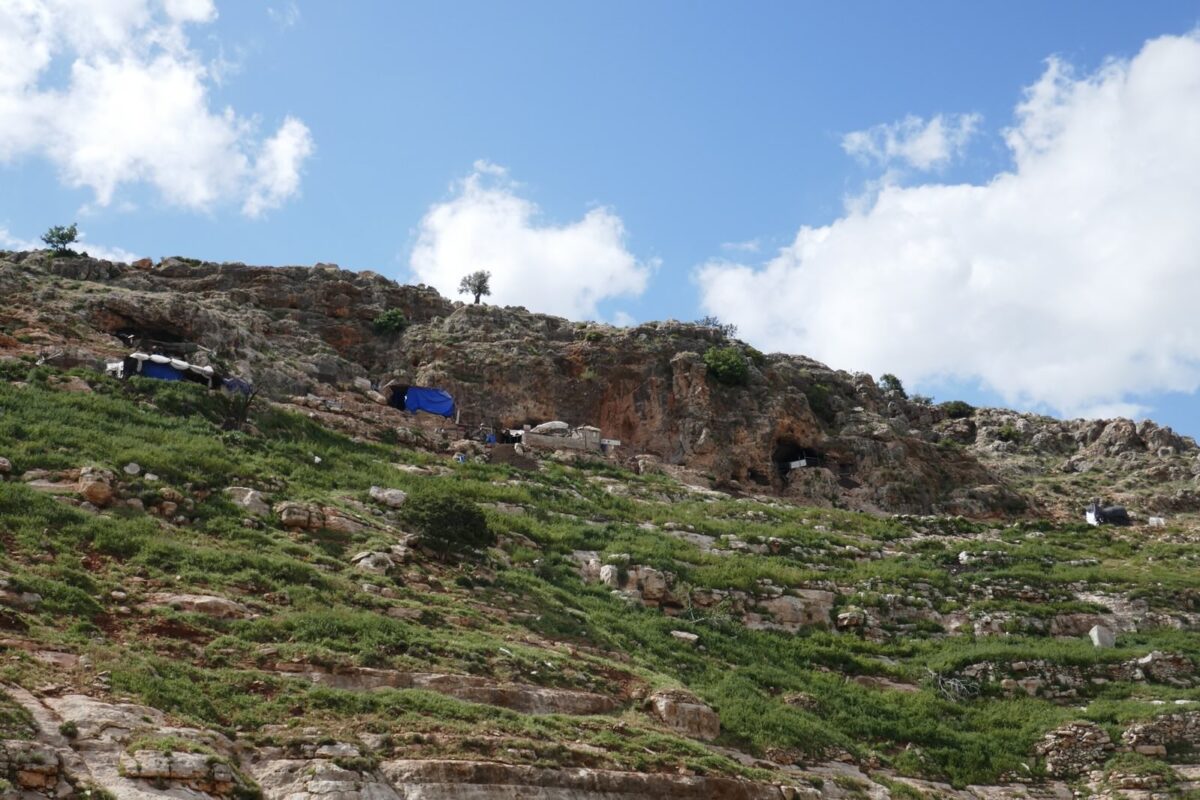
Through persistence and legal pressure, the farmers eventually reclaimed their land—a fragile, partial victory. Their endurance is what might be called agricultural resistance. It is the daily tending of trees whose resilience has outlived empires.
Resilience is sacred: the stubborn refusal to abandon olive roots connected to soil that remembers all. To rebuild, to replant, to remain—this is the rhythm of life under occupation, the quiet chant of continuity.
The First Mindfulness Training on non-attachment to views warns against being bound by doctrines and ideologies. In Kufr Thulth, I witnessed the violence that flows when ideology hardens into belief in exclusive ownership, rather than from a nurturing relationship with the land across generations.
Breathing with what I witnessed helped me settle before opening to what would come next.
In the Jordan Valley: water as weapon
In the Jordan Valley, I met the last remaining shepherd of his village, a father of ten who grazes his flock on ancestral land. At night, drones circle; settlers attack and loot. During the day, young armed settlers intimidate, destroy, and harm his family.
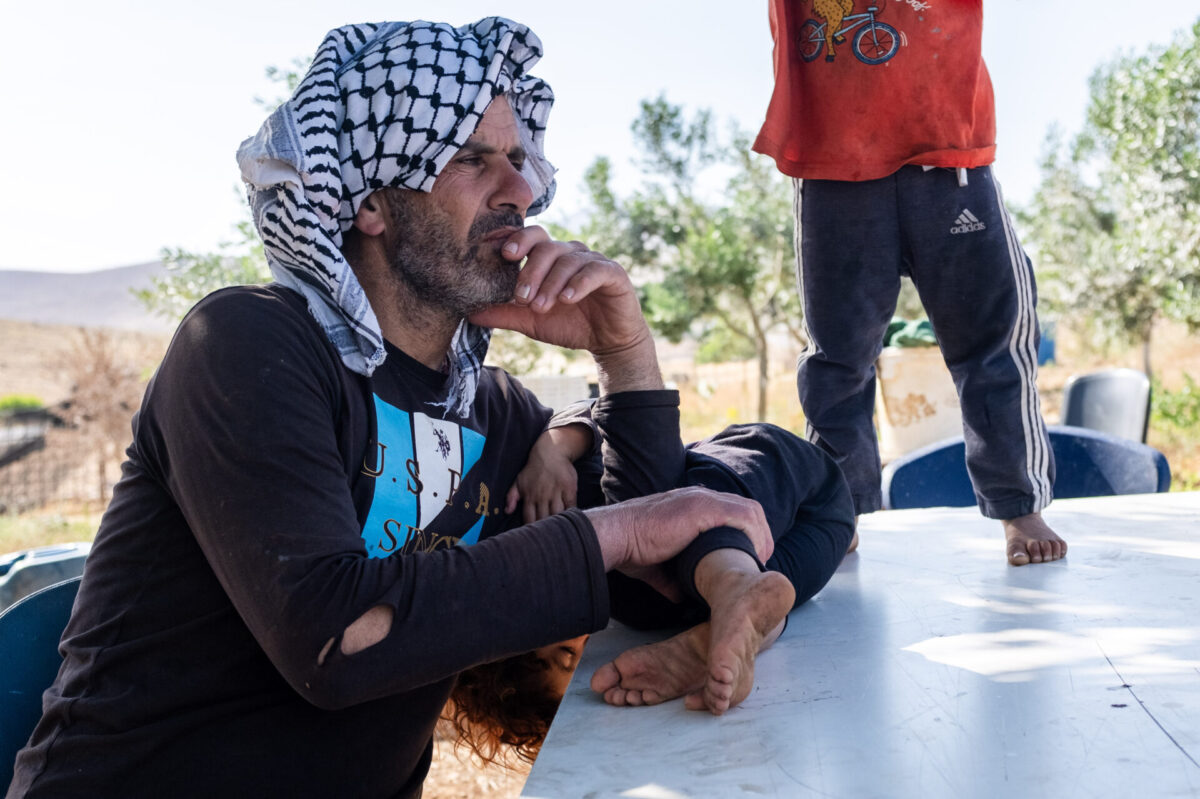
Around him, settlers’ farms bloom with vineyards, fruit, vegetables, and dates—lush, irrigated, and fenced. He gestured to the stream flowing past his home. “The water flows by,” he said quietly, “but we are not allowed to drink.” The wells that once sustained his village are sealed, the springs redirected to fill settler pipes and irrigate occupied land.
I felt the quiet, vigilant exhaustion of people who know violence can arrive at any moment. Yet, amid this weariness, I witnessed kindness: a farmer’s hospitality of tea shared under olive trees, children’s laughter breaking through tension, the defiant normalcy of care. Rage and tenderness rose together within me, and I tasted both with each sip of tea. This farmer’s resilience is quiet, steady, and rooted. It is the strength to wake each morning under occupation and still say, “I am here.”
Here, water—the element of life—has become a weapon of control. An entire economy is built on appropriated and restricted water access. Fruits on supermarket shelves labeled “Product of Israel” are harvested from dispossession, from the slow violence of erasure.
The Eleventh Mindfulness Training on Right Livelihood reminds us not to invest in companies that deprive others of their chance to live. It calls us to align our economic lives with compassion and justice. Here, the teaching becomes tangible: to consume mindfully is to confront complicity; to practice Right Livelihood is an act of nonviolent resistance.
In the cities: concrete and breath
Bethlehem: confinement and control
Bethlehem’s eleven-meter wall1—taller than Berlin’s—imprisons the birthplace of peace. It cleaves families from one another and farmers from their fields, yet its gray slabs bloom with murals and messages of defiant beauty. Across its surface, Banksy’s art opens illusory windows to blue sky beyond—visions of freedom painted over captivity.
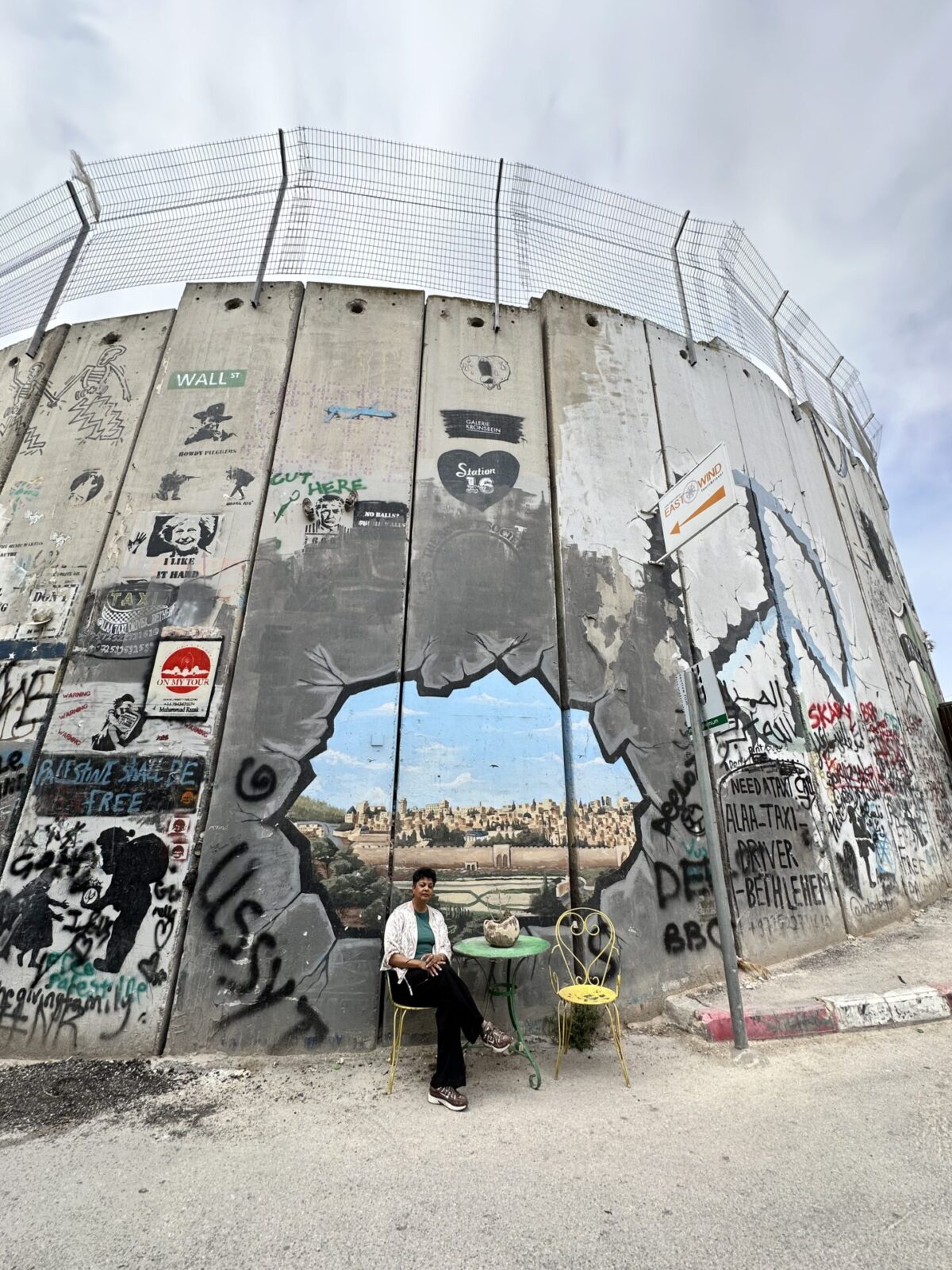
We build anyway,” said a Plum Village practitioner [name is withheld for safety] designing a mindfulness space for women—a refuge of stillness— in the wall’s shadow. He described how gatherings, phone calls, and Instagram posts are monitored; how even breathing together is treated as subversion. Still, he smiled: “We practice anyway. This is our life.”
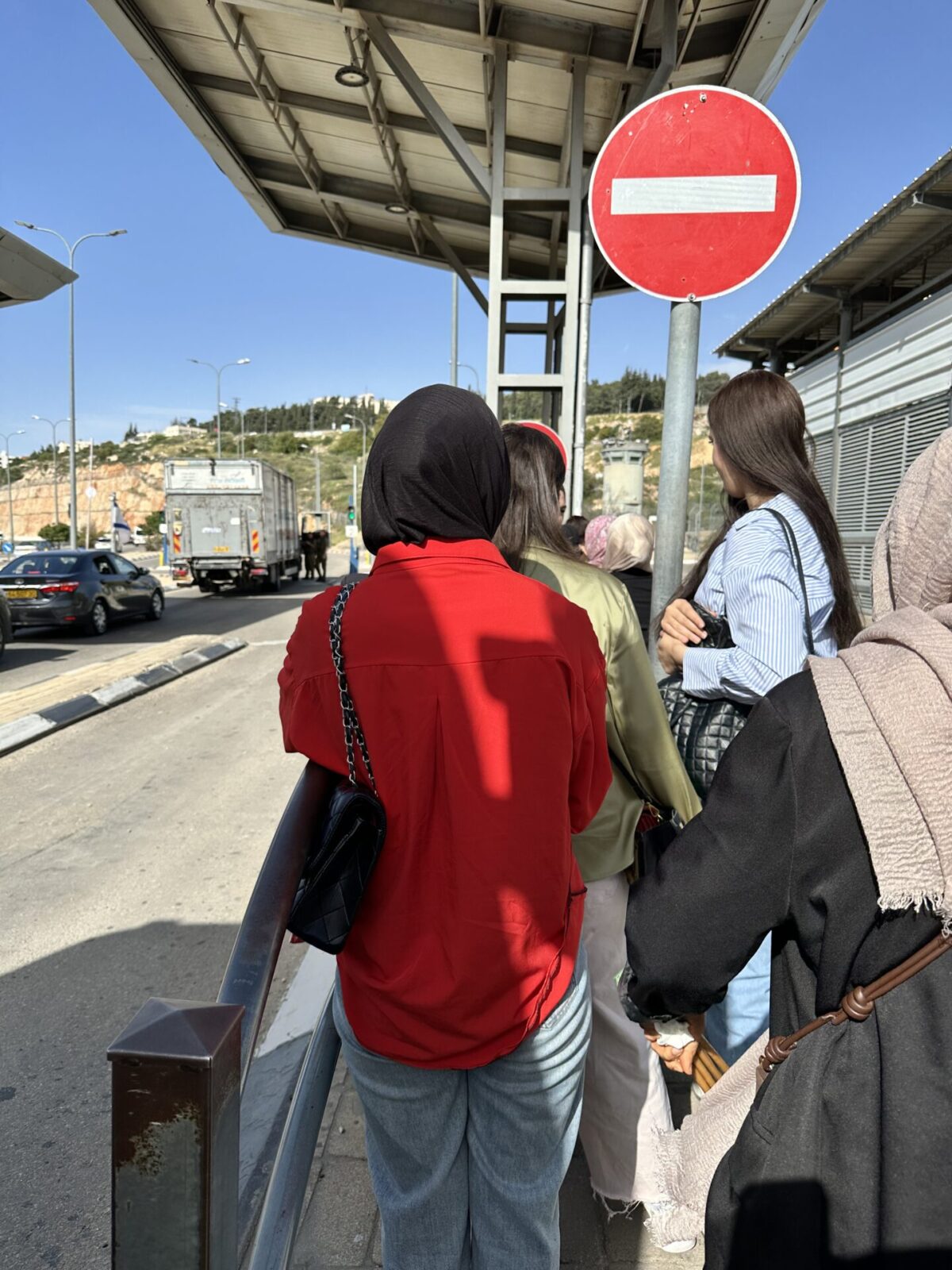
Just beyond the city lies Checkpoint 300, the main crossing between Bethlehem and Jerusalem. It is one of the busiest checkpoints in the West Bank, used daily by thousands of Palestinian workers and students. Here, people wait for hours in the sun while soldiers chat, scroll their phones, or sleep in the shade of their concrete tower. Here, time itself becomes a weapon—another form of occupation. Nonetheless, when I go through this checkpoint I practice mindful breathing.
Jerusalem: sacredness under siege
In Jerusalem’s Old City, holiness and fear share the same narrow streets. Pilgrims are turned away from churches at gunpoint, and worshippers pray only at the army’s discretion. Throughout Jerusalem, soldiers and settlers move through ancient alleys with rifles slung beside their children. The juxtaposition is jarring. Many settlers come from abroad—the US, Britain, Europe—holding dual citizenship and deeds to second or third homes. Under Israeli law, anyone who claims Israel as a “homeland,” even generations removed, is entitled to land and full rights denied to Palestinians who have lived here for centuries. It is colonization re-enacted in the twenty-first century: religion turned into real estate, scripture into strategy.
When I arrived during Easter, the maze of paths were nearly empty. Every few hundred meters, clusters of armed men stood with machine guns angled toward the alleys. I began navigating by using soldiers as landmarks through a city that calls itself holy.
At Al-Aqsa Mosque, tension thrummed in the air. When I lifted my camera, a soldier shouted, his weapon rising with his voice. Before it escalated, a group of Palestinian men intervened, pretending to offer me “a different path.” They gently guided me away—saving me without ceremony. Only later did I realize they had quietly rescued me.
Beyond the walls, in Silwan, the ground itself is being rewritten. Under the guise of preserving antiquity and holy sites, ancient stones are unearthed to justify new demolitions. Each excavation becomes both metaphor and machinery: digging to create divine legitimacy while uprooting the living.
To walk through Jerusalem is to practice mindfulness in its most demanding form: to keep breathing where faith is fenced, to remain present where holiness has been turned into property. To breathe here is to resist forgetting—to remember that sacredness and humanity cannot be possessed, only shared collectively.
Hebron: the architecture of apartheid
In Hebron, apartheid is visible in steel and glass. The Ibrahimi Mosque is literally divided in two, its entrances guarded by metal detectors separating Muslims and Jewish worshippers. Once-vibrant Shuhada Street is now a ghost road: Palestinians are forbidden even to walk there.
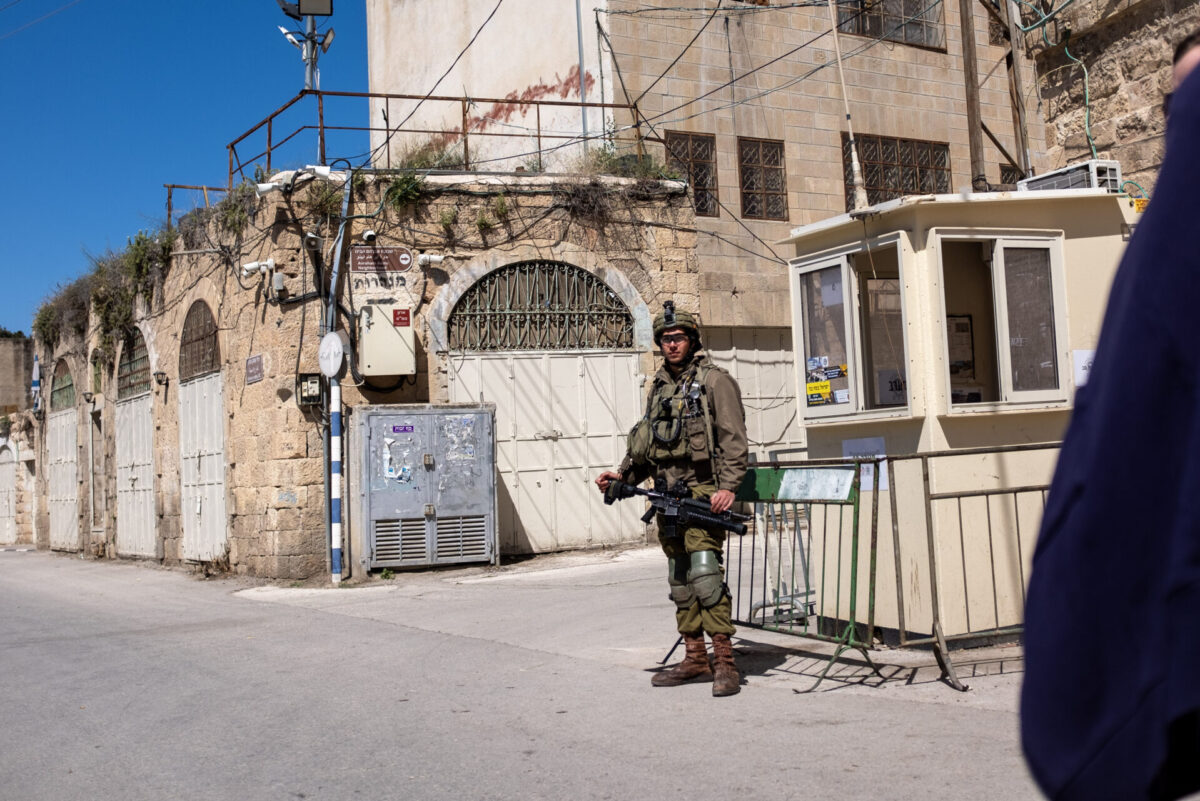
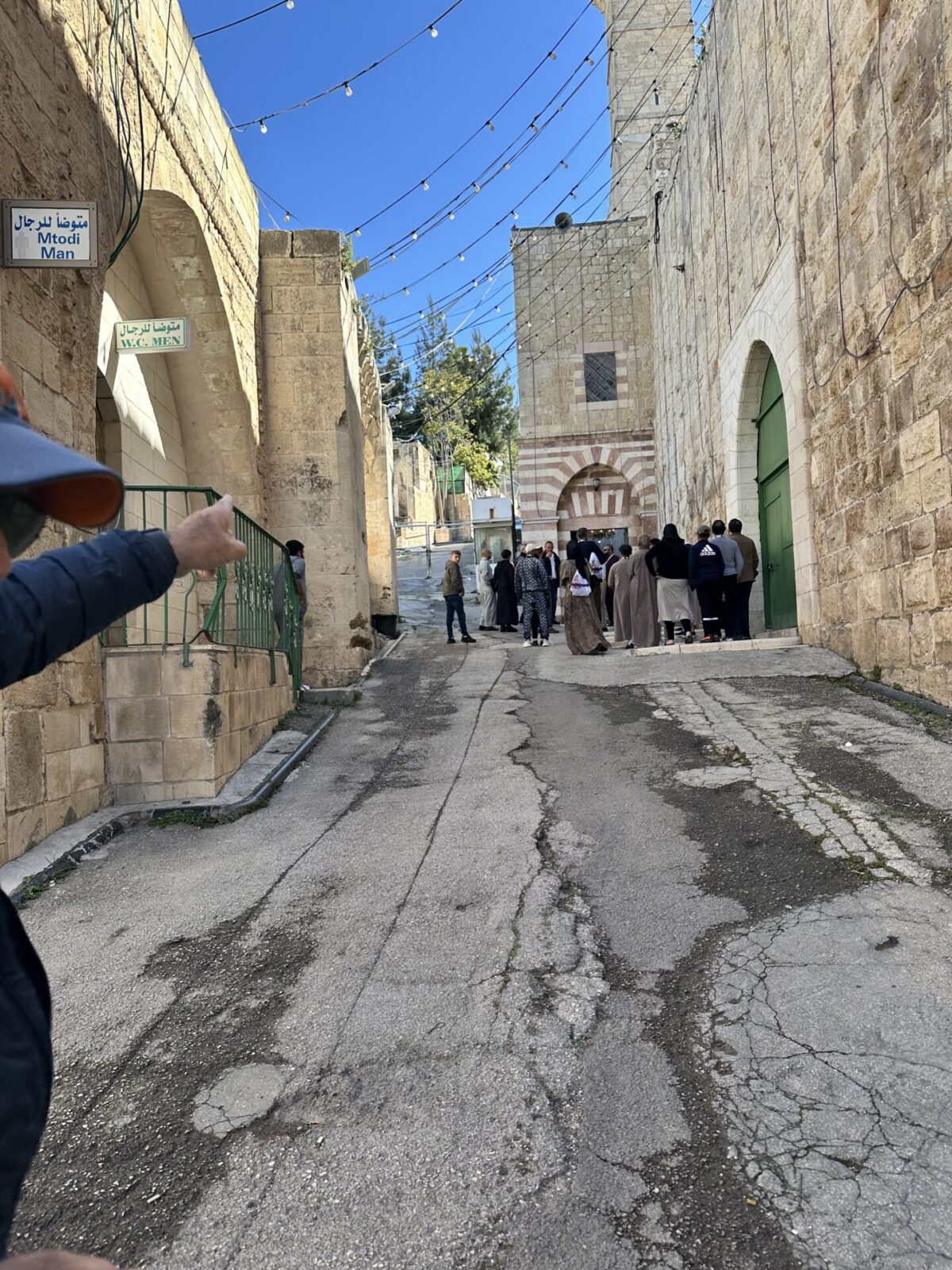
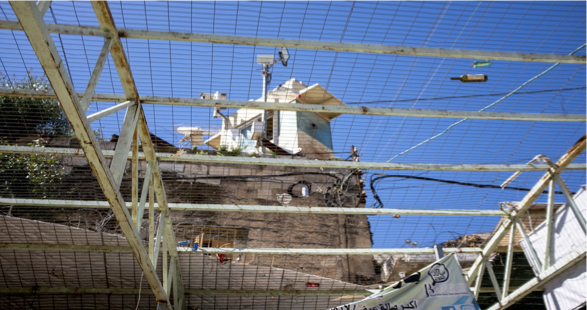
Above the Old City market, settler schoolchildren hurl bottles, rubbish, and even urine onto the stalls below. The wire mesh stretched overhead—funded by the EU to protect vendors—has become both a shield and a symbol of Europe’s ineffectual care—a band-aid of conscience, protective in appearance yet indifferent in effect, a fragile net of complicity.
In the H2 zone (an area under full Israeli military control), 34,000 Palestinians live under curfew-like restrictions beside about 700 settlers protected by 2,000 soldiers. Soldiers stand behind glass, rifles poised, watching the rhythm of life as though observing a distant experiment. The imbalance is total: two realities layered on the same stone streets.
To walk through Hebron is to feel the weight of separation pressed into the landscape itself. Yet it is also to witness resilience as a form of meditation: the refusal to let hatred occupy the heart. Beneath the lattice of control, life persists. Vendors still sell spices and bread; children run errands; elders greet visitors with tea. Here, every smile offered across a checkpoint, every loaf of bread sold through wire, becomes a lesson in connection and the practice of dignity in the heart of war.
Ramallah: creativity as continuation
Ramallah stands as the paradox of Palestinian life: cafes and galleries thrive under the shadow of occupation. It is both the mind and the mirror of the West Bank—cultured, restless, surrounded by checkpoints. The roads into and out of the city form a choreography of control. Every journey is measured in minutes and permissions; every checkpoint is a reminder of who commands movement.
At the city’s edge stands the Yasser Arafat Mausoleum, built of pale Jerusalem stone and glass. Its nineteen-meter cube represents the nineteen years Arafat spent in exile before his return. Its transparent walls and open sides symbolize his dream of a free Palestine: visible yet unrealized. A narrow stream of water flows toward Jerusalem, toward where he longed to be buried. The Yasser Arafat Mausoleum is a shrine to unrealized freedom, a reminder that both peace and justice remain out of reach here.
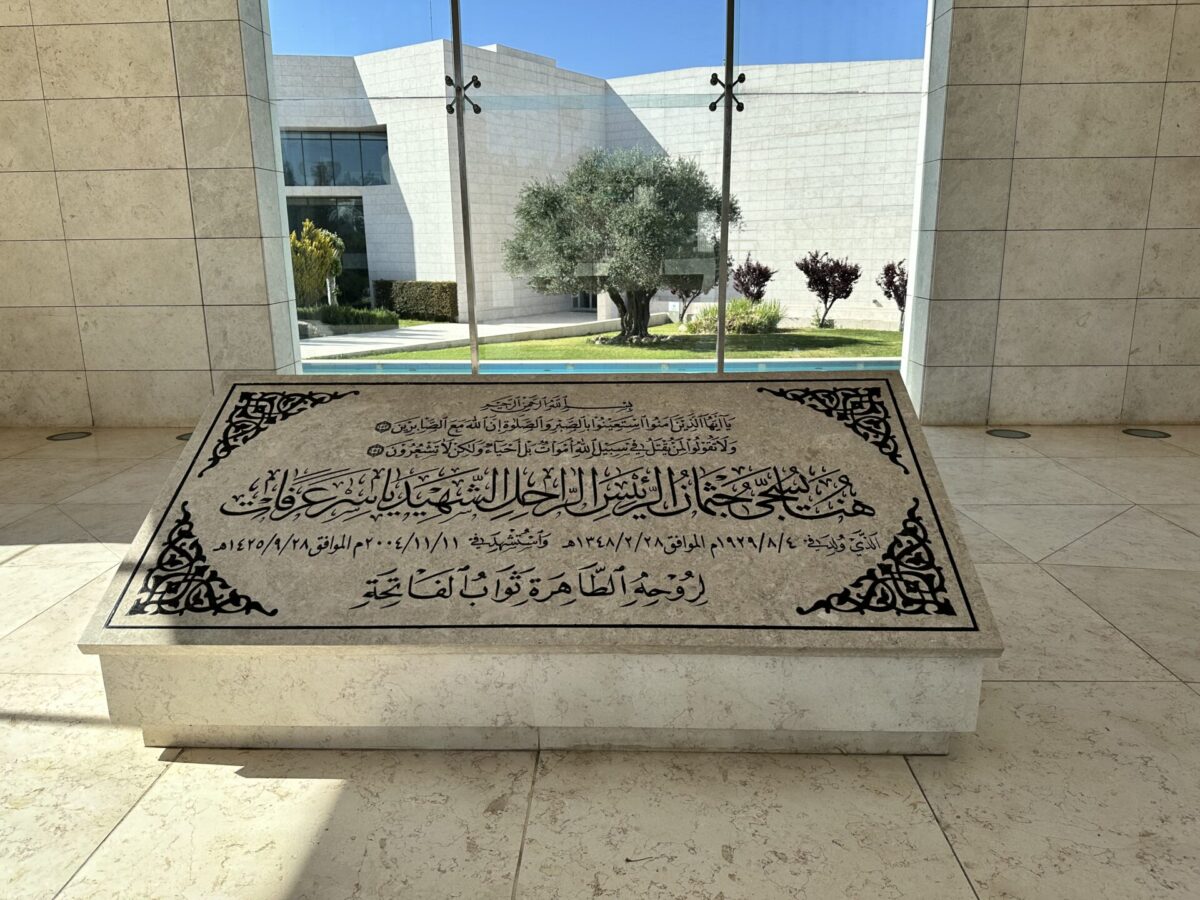
Standing before the mausoleum, I recalled Yasser Arafat at the inauguration of Nelson Mandela in 1994—his small frame alert and animated, hands moving as if history itself were speaking through him. It was more than symbolism. It marked a moment when liberation movements separated by geography stood within the same unfinished history.
Ramallah hums with this spirit of persistence. Its cafes buzz with poets and activists; its galleries pulse with art and argument. Here, creativity is the practice of persistence—the transformation of grief into music, captivity into imagination. To make art under occupation is to breathe freely where freedom is denied. It is hope, rendered as mural, poem, or performance. In Ramallah, to create is to celebrate the potential of liberation itself.
Nablus: history under occupation
Cradled between Mount Gerizim and Mount Ebal, Nablus holds centuries of coexistence—Canaanite, Samaritan, Christian, Muslim. It is believed to be the place of the Good Samaritan, the parable of compassion across enmity. For generations, Samaritans, Christians, and Muslims lived here side by side, each holding a thread of the sacred story. Today, only a small Samaritan community remains on Mount Gerizim, tending its faith quietly within this system.
Beneath its beauty lies tension. Nablus is raided almost weekly, sometimes nightly. Armored jeeps roll through its narrow streets; drones hum above like mechanical cicadas. Shops shutter, families wait. Here the occupation feels like weather—sudden, unpredictable, and violent.
Whenever Jewish settlers visit Joseph’s Tomb, a site revered by both Jewish and Muslim traditions, the entire city is locked down. Roads are cleared for hours as soldiers backed by armored vehicles escort hundreds of worshippers to the tomb. It is a show of dominance disguised as devotion. A child’s shout, a single stone, can draw live fire. The message is clear: holiness belongs to those with guns.
Here, even sacredness has been militarized. History itself lies under occupation. In some nationalist narratives, ancient Samaritan and Christian traditions are recast in exclusivist terms—Abraham, long revered by Jews, Christians, and Muslims alike, claimed as solely Jewish; Jesus reframed through a political lens rather than remembered for his teachings of love and compassion. Erasure happens not only through demolitions, but through the rewriting of religious memory.
And yet, the air still carries the sweetness of knafeh (cheese-based sweet pastry) wafting through the alleys. A mother sweeping her doorstep becomes a meditation bell—the steady rhythm of daily life within suffering.
Camps of memory
Across the West Bank, refugee camps punctuate the landscape—Balata near Nablus, Am’ari near Ramallah, Aida by Bethlehem—each a pocket of compressed history surrounded by walls and watchtowers. They are places where density itself becomes a form of remembrance, where people and memory overflow beyond every boundary.
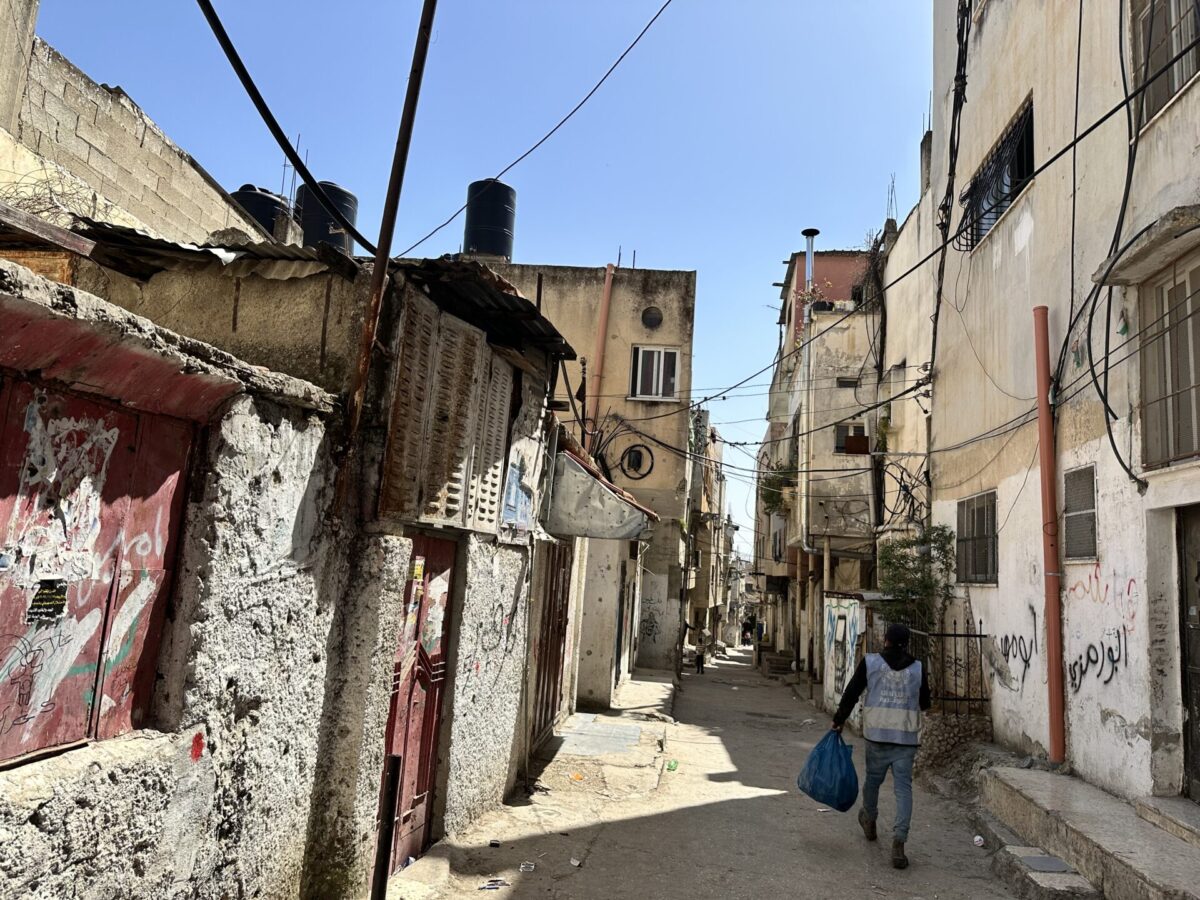
In Balata Refugee Camp near Nablus, 30,000 people live within a quarter of a square kilometer—one of the most densely populated places on earth, its narrow borders absorbing generation after generation with no horizon of expansion. Families descend from those expelled from Jaffa, Haifa, and Lydda in 1948, still waiting for a promised return, as newly uprooted find their way into the same constricted space. Buildings rise so high that sunlight scarcely reaches the ground; some alleyways are so narrow one must turn sideways to pass.
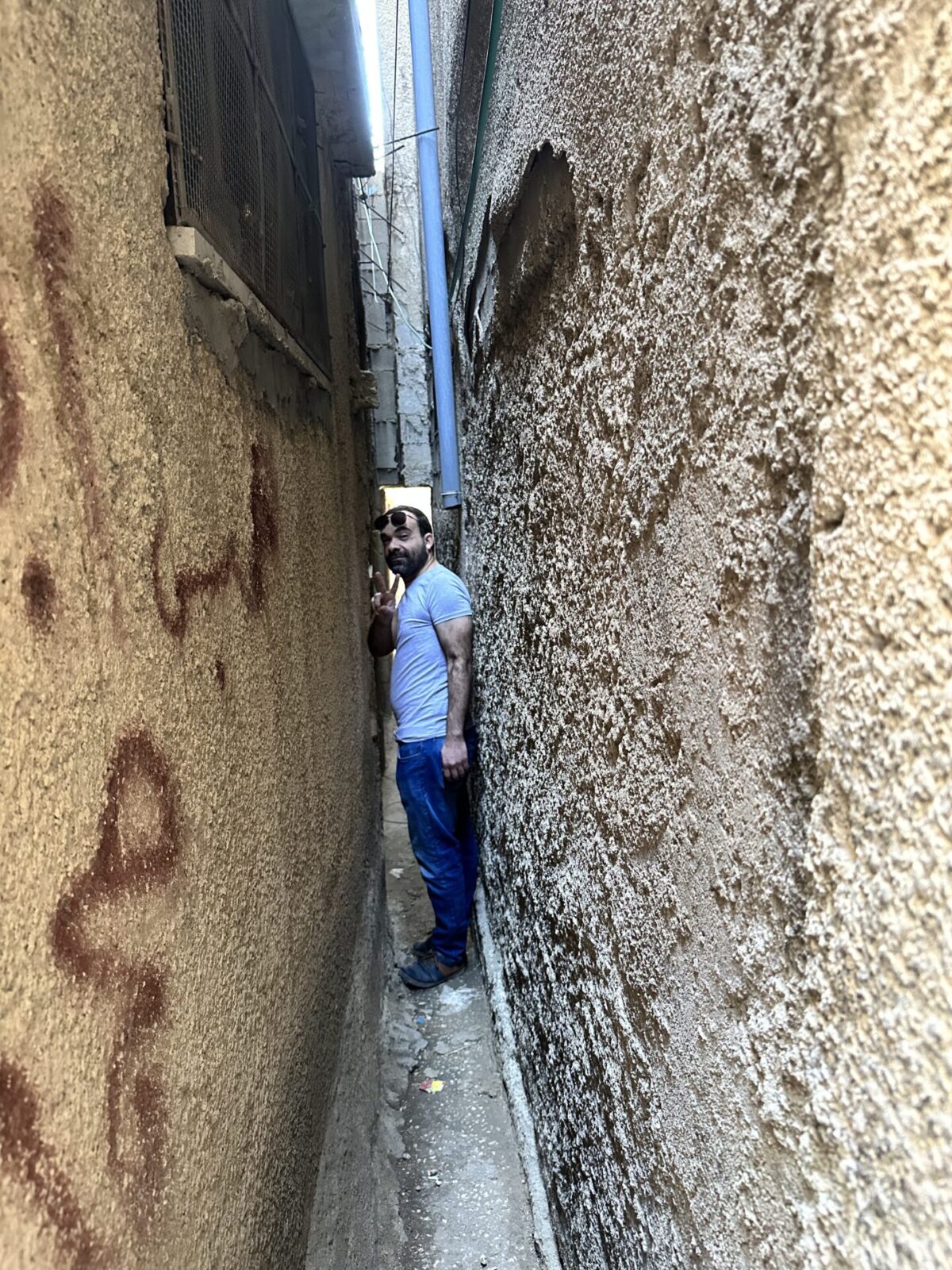
And yet, even here, community persists. Families help one another under conditions that defy imagination. Survival becomes remembrance—the refusal to let history be forgotten or rewritten. Resilience is inherited, passed like a family story: both testament and torment, binding generations through endurance.
Two hours after I left Balata, I learned that two children—seven and nine—had been kidnapped by settlers, tied to a tree, and left under the blazing sun for hours. They were found alive, collapsed and unconscious, but deeply traumatized. Anger rose in me, fiery rage at a world that does this to children. I let myself feel it fully before reminding myself to breathe into the heaviness and anger. Both are necessary: the fury that says “this is wrong” and the steadiness that sustains action. Their suffering became a koan for me: how can I stay open to such pain without turning away or not letting compassion harden into despair?
The Ninth Mindfulness Training calls us to speak truthfully about suffering. But what words can hold this? Deep listening can honor pain, but it cannot dismantle checkpoints or free children from chains. Sometimes, practice feels futile—like offering silence to a storm. Yet even to stay present, to bear witness without turning away, is to refuse the world’s indifference. Presence may not change the machinery of oppression, but it keeps our humanity from being consumed.
Neve Shalom / Wahat al-Salam: the island of coexistence
Amid this geography of separation stands Neve Shalom—Wahat al-Salam, the “Oasis of Peace.” A small cooperative village where Jewish and Palestinian citizens of Israel live together, their children learning both Arabic and Hebrew in the same classrooms. It feels like a small miracle—an island practicing equality in an ocean of inequity.
And yet its very existence reveals the limits of possibility: harmony permitted only within containment. The village endures because it does not threaten the wider order. Beyond its borders, walls still rise, movement is still restricted, and dispossession defines daily life. Inside, people practice co-living; outside, power decides who may move, build, or breathe.
Neve Shalom embodies both the possibility and impossibility of coexistence and peace under unequal power. It offers a glimpse of what could be but cannot last while injustice endures beyond its borders. Peace without justice is a temporary truce; it must root itself in freedom to survive.
The tapestry of oppression
Since October 2023, Israel has revoked most West Bank residents’ work permits, cutting off tens of thousands of livelihoods overnight. They are being replaced by imported labor from India and the Philippines—a quieter form of colonization, erasing economic presence while maintaining the illusion of normalcy. Even the right to earn a living has become part of the machinery of control.
The more I traveled through the West Bank, the more I recognized apartheid’s “Bantustans”—fragmented “homelands” and townships that promised autonomy but delivered isolation. The walls, permits, and segregated roads were instantly familiar. Is this the intention of a two-state solution?
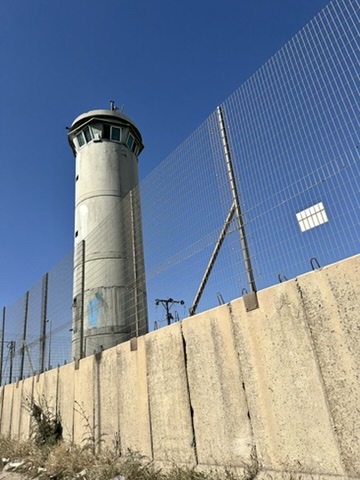
Yet the intent of these systems differs. Apartheid sought to control and exploit; it needed our labor. Here it is to remove Palestinian presence altogether. The difference between domination and disappearance.
We often compare South Africa and Palestine and other places of oppression. As a practitioner, I am wary of dualistic and imperial comparisons of sufferings. Our Buddhist practice teaches that all oppression arises from the same roots: greed, hatred, and delusion, creating the belief that one life has more worth than another. What struck me most was how, across systems of oppression, this landscape of separation produces both exhaustion and grace.
Here, erasure and endurance coexist: one seeks to empty the land; the other fills it with meaning. People continue to build, teach, harvest, and pray. Families open their doors to strangers; communities gather under threat; generosity flows where freedom does not.
Everywhere I went, I met sumud—steadfastness: a shepherd keeping his flock, farmers replanting after demolitions, families rebuilding by hand. Across refugee camps, villages, and cities alike, this rooted refusal to vanish becomes not only survival but a moral stance. It has kept a people on their land and in their history—a mosaic of those who transform endurance into defiance, pain into purpose, and loss into legacy.
Yet this resilience, however noble, has become a forced inheritance: a moral triumph born of systemic cruelty. That anyone must dig so deep simply to survive indicts us—especially in the West, the Global North. True solidarity is not only to praise Palestinian strength, but to end the structures that force it.
The suffering created
When I returned home, my body gave way. I was ill for two weeks—exhaustion, grief, rage, and my own historical trauma held in check while I was there. My practice helped me stay present, to breathe through difficulty, to hold the pain. But Palestine revealed the limits of my practice in the face of trauma this vast. I had swallowed my rage to remain functional, to keep witnessing. Sometimes the body holds what the mind cannot process. Sometimes healing requires breaking open. Rage, too, can be sacred—it names what is wrong and refuses to normalize it.
In Palestine, people do not have that luxury; trauma renews itself daily. I could collapse because I had left. They cannot leave. This privilege—to witness and then retreat to safety—haunts me. What does it mean to practice mindfulness in relation to suffering I can choose to step away from?
The suffering of Palestinians is not accidental. It is created—daily, deliberately—through decisions made by governments, corporations, and ordinary people who benefit from or remain silent.
The shepherd’s thirst is manufactured. The children’s terror is policy. Demolition orders, checkpoints, segregated roads, appropriated water—these are not inevitabilities. They are choices.
And we—those living comfortable lives far from occupation—are implicated. Not because we personally commit these acts, but because our silence, our consumption, our investments, and the institutions we support often sustain them too.
This is the hardest teaching. Thích Nhất Hạnh speaks of interbeing—no one exists alone. Interdependence means we cannot separate ourselves from the suffering we witness. The occupation is upheld not only by soldiers and settlers, but by a vast network of complicity stretching across oceans.
And yet, even here, there can be a return to the breath—to the earth beneath our feet and its quiet pulse of life. This is not escape. It is endurance. It is how we remember.
Five practices of solidarity
1. Practicing generosity
Supporting the Garden of Hope is not charity; it is continuation practice. To stand with the Garden is to join the practice of staying human under occupation: welcoming children from refugee camps, offering trauma-healing programs, creating opportunities for solidarity, and cultivating action alongside Israelis committed to justice. Each donation, visit, and welcomed child waters the seeds Issa has planted—courage, compassion, and presence amid violence. For me, the building itself is a living expression of the Plum Village tradition: resilience rooted in compassion, understanding made visible in action.
And yet, questions remain: How do we support without centering ourselves or our benevolence? How do we ensure that our support does not carry with it our notions of what the center should be?
2. Practicing mindful consumption
The Fifth and Eleventh Mindfulness Trainings invite us to look deeply at what we consume—not only food and media, but the systems our participation sustains. Practiced fully, they ask: How am I connected to this suffering? What am I consuming, funding, or overlooking that allows it to continue?
The occupation is built on greed for land and resources, sustained by fear, and justified through delusion—the very roots of suffering the Buddha described. The Eleventh Training encourages us to see the full web of participation: our purchases, investments, and the institutions we are part of—sanghas, universities, pension funds, foundations—all woven into our collective karma.
Boycott, sanctions, and divestment can be expressions of ethical clarity. Yet in spiritual communities, we sometimes hesitate. We may tell ourselves that not taking sides is a form of equanimity, or that non-duality asks us to remain above political division. But equanimity is not indifference, and non-attachment does not mean the absence of discernment. To look deeply at power and suffering is itself part of practice.
Often what we fear is not complexity, but the discomfort of acting. Comfort maintained through injustice can quietly become complicity.
To withdraw support from structures that profit from occupation is mindfulness made visible. Now we ask: Where do I cling to convenience? What prevents me from responding with clarity and compassion?
3. Practicing deep listening
Solidarity begins with listening—to understand before acting. Listening can itself be liberating, allowing those most affected to define the terms of their freedom and speak their truth.
How do we ensure that Palestinian voices—those living this violence daily—remain at the heart of the work? How do we use our access and privilege to amplify rather than overshadow? Even well-intentioned activism can unintentionally reproduce the erasure it hopes to resist.
In our acts of solidarity, can we notice how easily another’s suffering becomes a mirror for our own wounds, or a stage for our virtue? Empathy is not equivalence. Solidarity honors the difference between those who live under occupation and those who act from relative safety. We must be careful not to let our voices eclipse those on the ground.
We can also reflect on how often Palestinian voices are paired with Israeli peacemakers, as though both stand on equal ground when one lives under occupation and the other does not. The impulse to “balance” narratives can flatten structural violence into a story of two equal sides. Naming this clearly is not divisive; it is an act of honesty—and honesty is part of healing.
4. Practicing non-attachment to views
Our practice invites us to examine our expectations of solidarity. Too often we can impose ideals or “right behaviors” on those living under siege—judging a Palestinian for drinking a boycotted brand or using equipment marked by occupation, without seeing the web of control restricting choice.
Solidarity that demands perfection, or insists on one correct way of acting, risks becoming its opposite.
Thích Nhất Hạnh reminded us, “Without understanding, our actions might cause others to suffer....the more we do, the more trouble we may create.”2 Compassion is not naïveté; it is the courage to remain open without turning clarity into self-righteousness.
No single form of action holds moral superiority. Silent sitting, protest, teaching, writing, organizing—all belong to a shared fabric of engagement. Each can be a continuation of compassion.
Transformation requires both stillness and movement, prayer and policy. Our practice is not a refuge from the world, but a way of inhabiting it differently.
How do we act without becoming hardened by our own certainty? How do we remain truthful without closing the heart? These questions are themselves part of the practice.
Right Action is understanding made visible. It is love in motion.
5. Practicing non-discrimination
Right Action calls us to embody humility and inclusion—not only in how we relate to Palestinians, but within our own circles. It invites us to look deeply not only at the structures we resist, but at the energies moving within and through our movements of solidarity.
Solidarity can narrow. We gather with those who share our politics, friendships, identities, language, and access to power—circles where trust feels easy. Yet when comfort replaces curiosity, we risk reproducing the very exclusions we oppose, becoming closed circles that shut others out. How do we keep our circles porous and alive, open to renewal?
From here, the invitation deepens. How do we extend inclusion beyond those who already agree with us—toward those whose histories or beliefs unsettle us? Can we build movements broad enough to hold complexity without surrendering clarity? And how do we oppose systems that sustain harm—such as the ideology of Zionism—while still making space for those shaped by them?
Inclusion is not compromise; it is faith in our shared capacity for transformation. It means creating conditions in which even those entangled in harm are not cast out, but invited toward awakening. Can our compassion be steady enough to hold this complexity—inviting transformation even where it feels most difficult?
The practice of hope
At the airport, I was interrogated. My luggage was emptied, my books examined page by page, my devices scrutinized. Beneath the fear rose anger—the instinct to see the soldier as an “other.”
I tried instead to breathe and remember that he, too, was caught in a system larger than himself. In that moment, mindfulness became defiance—the refusal to let fear dictate my humanity.
Standing in the Garden of Hope, surrounded by olive trees and concrete walls, I understood that to plant anything there is an act of faith. To practice under occupation is not retreat but rooted presence.
A friend in Bethlehem told me, “The wall is not permanent. Nothing is. But our love—that will remain.”
Liberation without compassion risks becoming another form of violence. Justice without discernment can harden into righteousness.
The practice asks us to hold both: moral clarity and an open heart, fierce action and tender presence. To witness is to act. To remain human is the deepest resistance.
The Garden of Hope is not only for Palestine. It is a question posed to all of us: where suffering is manufactured, will we turn away—or will we act? Sudan, Haiti, Ukraine, and so many others remind us that injustice is not isolated—and neither can our practice be.
Our lives and our actions are our message.
As Thích Nhất Hạnh said, “When bombs begin to fall on people, you cannot stay in the meditation hall all of the time.”3
1 The 11-meter-high concrete barrier along Bethlehem’s northern edge forms part of what Israel calls the security fence and Palestinians term the Apartheid Wall. Begun in 2002 during the Second Intifada, it extends into the West Bank, enclosing or isolating Palestinian land; at 11 meters, it exceeds the height of the former Berlin Wall (3.6 meters). In 2004, the International Court of Justice held that sections built inside the West Bank violate international law and should be dismantled, while Israel maintains the barrier is a necessary security measure. The wall separates Bethlehem from Jerusalem—historically its economic and religious lifeline—restricting agricultural access and channeling movement through Checkpoint 300 (Rachel’s Tomb checkpoint), with permits required for Palestinians entering Jerusalem.
2 Thích Nhất Hạnh, The Heart of the Buddha’s Teachings (New York, NY: Broadway Books, 1998), 82-83.
3 John Malkin [interviews Thích Nhất Hạnh], “In Engaged Buddhism, Peace Begins with You.” Lion’s Roar (July 2003): https://www.lionsroar.com/in-engaged-buddhism-peace-begins-with-you/.