Nurturing the next generation of Order of Interbeing members and aspirants
By Elli Weisbaum, Như-Mai Nguyễn on
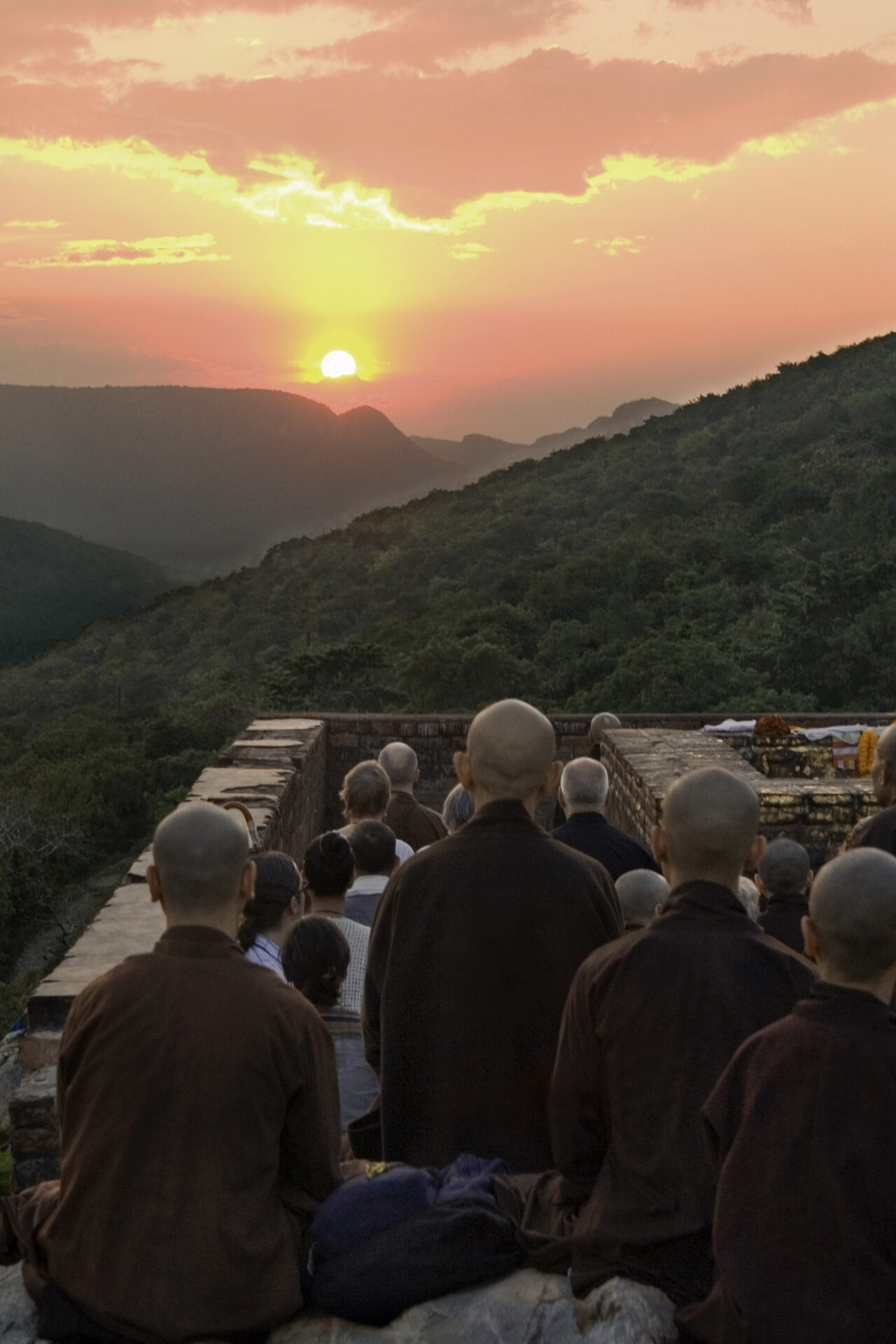
Even though we were supposed to have our eyes closed, I kept mine open. The sound of the bell was just fading, and a cooling breeze rustled the leaves of the olive tree overhead, offering comfort. I looked around, appreciating the people I was with.
Nurturing the next generation of Order of Interbeing members and aspirants
By Elli Weisbaum, Như-Mai Nguyễn on
Even though we were supposed to have our eyes closed, I kept mine open. The sound of the bell was just fading, and a cooling breeze rustled the leaves of the olive tree overhead, offering comfort. I looked around, appreciating the people I was with.
We were a group of eleven Wake Up Order of Interbeing (OI) members from all over North America, along with a few of the young monastics, sitting in a Dharma sharing circle in Solidity Hamlet of Deer Park Monastery. We had just spoken about the joys of the practice, but also shed tears over the burdens of being a minority demographic within sangha spaces (e.g., sexual, racial, or age minority), being a sangha organizer, and the overload of juggling adult responsibilities with sangha building.
From a clearing nearby came the laughter of another Dharma sharing group—our Wake Up OI aspirants—reminding us of the larger energy of young practitioners filling the monastery grounds. Never before had such a diverse group of young adults with shared aspirations to walk the OI path gathered here. It felt like a moment for the Plum Village history books.
–Như-Mai
We’d like to share some of our experiences training new young OI aspirants/members, as a part of an innovative pilot initiative to mentor young Order of Interbeing (OI) aspirants across the Americas. This article describes how our group originated and has grown to include over fifty aspirants and pre-aspirants , interwoven with personal reflections about our in-person gathering with our study group mentors/mentees at Deer Park Monastery in May 2025.
We invite you to look deeply at what is said and left unsaid. By looking deeply, we hope you can see how the story of our study group is an illustration of many forms of continuation. It is a story of practitioners raised in the tradition of Plum Village from childhood/young adulthood, who now find themselves stepping forward into the roles of OI mentors and mentees. It reflects our aspirations to continue Thầy’s work to carry on the legacy of Buddhism in general and Vietnamese Buddhism more specifically which has for centuries invited both monastic and lay friends to be equal partners in studying and teaching the practice. Our study group also reflects Thầy’s approach of trusting young people to add their energy, perspectives and voices to keep our lineage fresh and applicable to “the language of our times.” It is the story of those of us who attended the June 2024 Order of Interbeing two-week retreat in Plum Village Upper Hamlet, France, during which Shantum Seth (senior lay Dharma teacher) reminded everyone that 2026 would be the sixtieth anniversary of the Order of Interbeing. Shantum encouraged everyone to start thinking about celebration and continuation. This sparked a flame in the five of us who were under forty-five and OI members to think of how we could nourish and support more young practitioners to join the OI.
Encountering young bodhisattvas
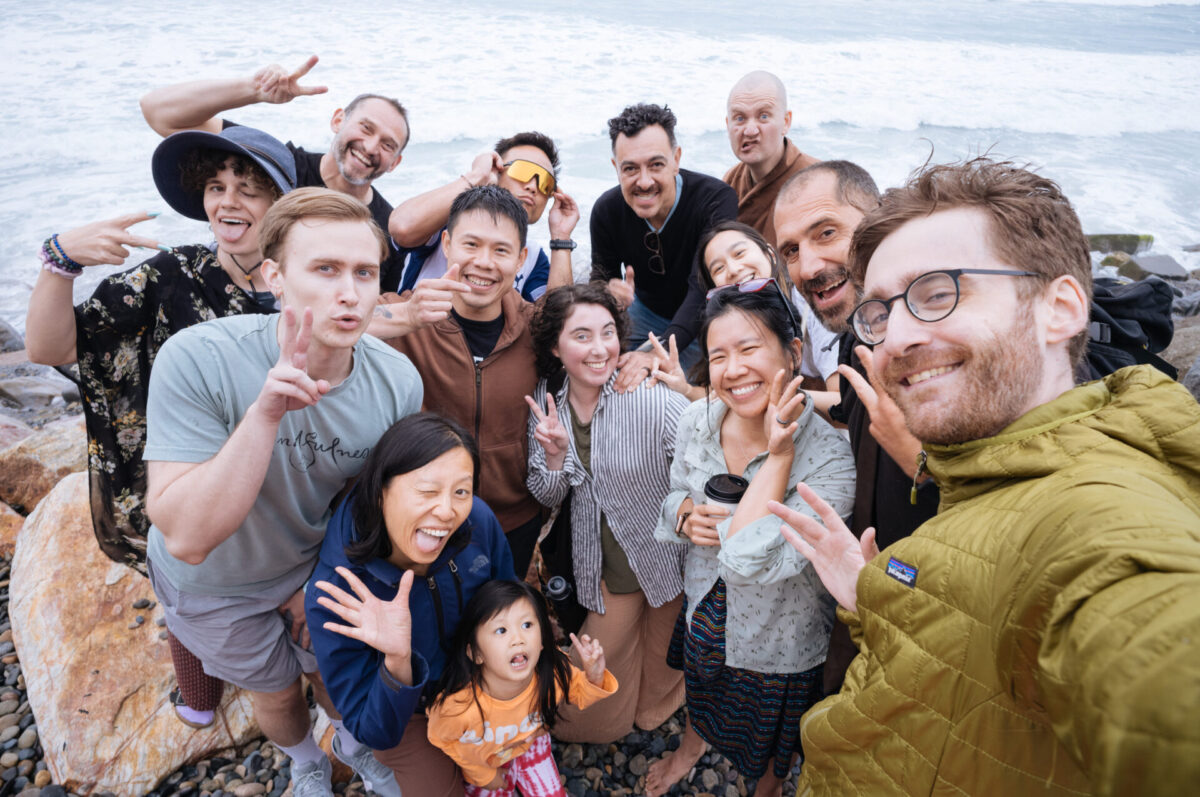
Originally our Wake Up OI study group started as a small idea, which has now grown beyond anything we ever imagined! The idea started when some practitioners from Wake Up Toronto and the online Chrysanthemum Rainbow Sangha requested OI member Pablo Seto and Dharma Teacher Elli Weisbaum, members of the Wake Up Toronto Sangha and North American Wake Up Care-Taking Council (CTC), for OI mentorship. We have had a few successful online Wake Up OI mentorship groups before, so we decided to try this model out again and combine these two groups of aspirants. When the other members of our CTC heard about our plan, they expressed knowledge of other Wake Up-age, long-term practitioners who were ripe for, and interested in, OI aspirancy/mentorship. From this, we decided to offer a survey to our North American Wake Up listserv to discover who in our community might want to be part of an OI study group. The response was overwhelming! Over fifty practitioners under forty-five, many of whom were BIPOC and/or queer, responded saying they would like to study with us.
Meeting each one of these incredible bodhisattvas who wishes to walk the path of The Fourteen Mindfulness Trainings—to study, learn, practice, and play together—has been the deepest gift for our organizing team. Our own bodhicitta has been deeply watered. It has also been a beautiful opportunity to connect with our wider intergenerational mahasangha. We are deeply grateful for the monastic and lay Dharma teachers who have supported us all along this journey, giving their guidance. In this article, we humbly present the steps and practical approaches to building a study group, in the hope that this will be of service to our wider sangha as we consider how to expand our trainings and make them accessible and inclusive. In this article, we have aimed to navigate with love and equanimity both the joys of the study group and the challenges and barriers that young people can face when aspiring to join the OI.
Our deepest aspiration is to collectively continue to nourish our joy and togetherness, and to listen and respond to the needs of our next generation, making these teachings accessible, available, and meaningful. We do this in the spirit of Thầy, who wanted to renew Buddhism and always be in the vanguard—innovating, cultivating, and iterating.
Thank you, Thầy, and thank you, sangha, for your love and trust. We hope we are worthy to receive it.
Challenges for young OI aspirants
We learned about some key barriers preventing young people from starting their OI aspirancy, including:
- Not having access to a local sangha to practice with
- Trouble finding an OI mentor
- Trouble finding a Dharma teacher
- Not enough time
- Not having spiritual friends on the path
- Not seeing themselves reflected in already-established members of the OI (e.g., BIPOC, queer, young)
- Not feeling “worthy” or “good enough” to belong to the OI
These barriers illustrate some key challenges faced by practitioners under forty-five who wish to learn, study, and practice The Fourteen Mindfulness Trainings: juggling early-mid life responsibilities with time to practice (e.g., work and family obligations such as caring for children and elderly parents); monetary limitations to take time off work and pay for/travel to retreats; and not feeling a sense of belonging in all-age sanghas, which in North America are often predominantly white and older.
Our experience mentoring and organizing a large online OI Study Group
This list should not be seen as fully comprehensive of our approach to mentoring, as there are so many details and complexities to fostering an inclusive/save space, transmitting the teachings of Thầy and our Plum Village tradition, mentoring our mentors and mentees, match-making our mentees with Dharma teachers etc. that cannot be captured in a single list!
| The initial invitation was sent out through the North American Wake Up listserv and North American Wake Up sanghas, then via word-of-mouth, with many lay/monastic Dharma teachers recommending individuals to join our study group. |
| Our organizers are five members of the North American Wake Up CTC, all under forty-five, including one Dharma teacher, three OI members, and one OI aspirant. |
| Aspirants are each part of a “study pod” based on affinity groups (e.g. Rainbow/Spanish speaker/BIPOC) and/or region/location (e.g. Toronto/New York/Ottawa, Deer Park, California etc.). |
| Ten Wake Up and Wake Up Alumni OI members support each of our study group pods and the aspirants in each pod. |
| In addition to their study group OI mentor/pod, each aspirant is required to have a Dharma teacher mentor that they meet with a minimum of four times over their study period; they are also encouraged to have additional OI mentors (all-ages). |
| At the suggestion of Brother Pháp Dung, Elli Weisbaum did an initial pass/creation of a syllabus (based on her experience as a university professor); this document has since been iterated with input from the study group organizing team and many lay/monastic Dharma teachers. We view the syllabus both as a helpful guide and hold it lightly as a living document that is being updated as we learn and grow through this pilot initiative. The syllabus includes sections on suggested readings, guidelines for the aspirancy process, monthly schedules including guest speakers etc. |
| The second Saturday of each month, the entire study group gathers online to practice with that month’s training. Typically, each month’s Zoom session is two hours. First hour: guest talk by a lay or monastic Dharma Teacher, followed by one hour of Dharma sharing breakouts in pods to reflect on that month’s training and talk. |
| Study group members are encouraged to self-organize additional study opportunities. For example, in our current cohort two aspirants started a monthly group called “Buddha-ful Play” which explores that month’s training through artistic and reflective practices. |
| There is not one suggested or required “timeline” for aspirants to “graduate” or “ordain” from our study group. We recognize that there is a spectrum of experience and each individual is on their own journey. We’ve seen there is a range of ordination readiness with some aspirants who ready to ordain at the one-and-a-half to two year mark, some who will take longer, and others who will never ordain. |
| We have continued to have so much excitement/interest and requests to join our study group that we opened an “auditing” option for any practitioners under forty-five globally to sit in on our monthly study session. |
| We reached out to monastic Dharma teachers to be monthly guest speakers. Out of our fourteen months, seven have a monastic Dharma teacher speaking. This is fostering a deep sense of love/connection with our monastic community. |
| We also have North American lay Dharma teachers giving guest talks and providing one-on-one mentorship to our aspirants. This is fostering an intergenerational sense of love/connection across our lay community. |
| Aspirants and mentors are part of a WhatsApp Community that has different “rooms” or threads, e.g. general announcements, rooms for each pod etc. This allows us to easily be in contact between our monthly sessions, with lots of discussion about practice and sharing of Plum Village events/talks etc. This is both a practical tool for organization and a space to build sangha. |
| Some OI Pod Leaders offer drop-in Zoom “office hours” where aspirants can pop in for fifteen minutes to ask questions and connect. |
| All aspirants are encouraged/required to practice with a “local” sangha. We encourage practicing in-person if that is safe/available, and have identified online options for those who wish (e.g. BIPOC/Rainbow Sanghas etc.). |
Gathering at Deer Park
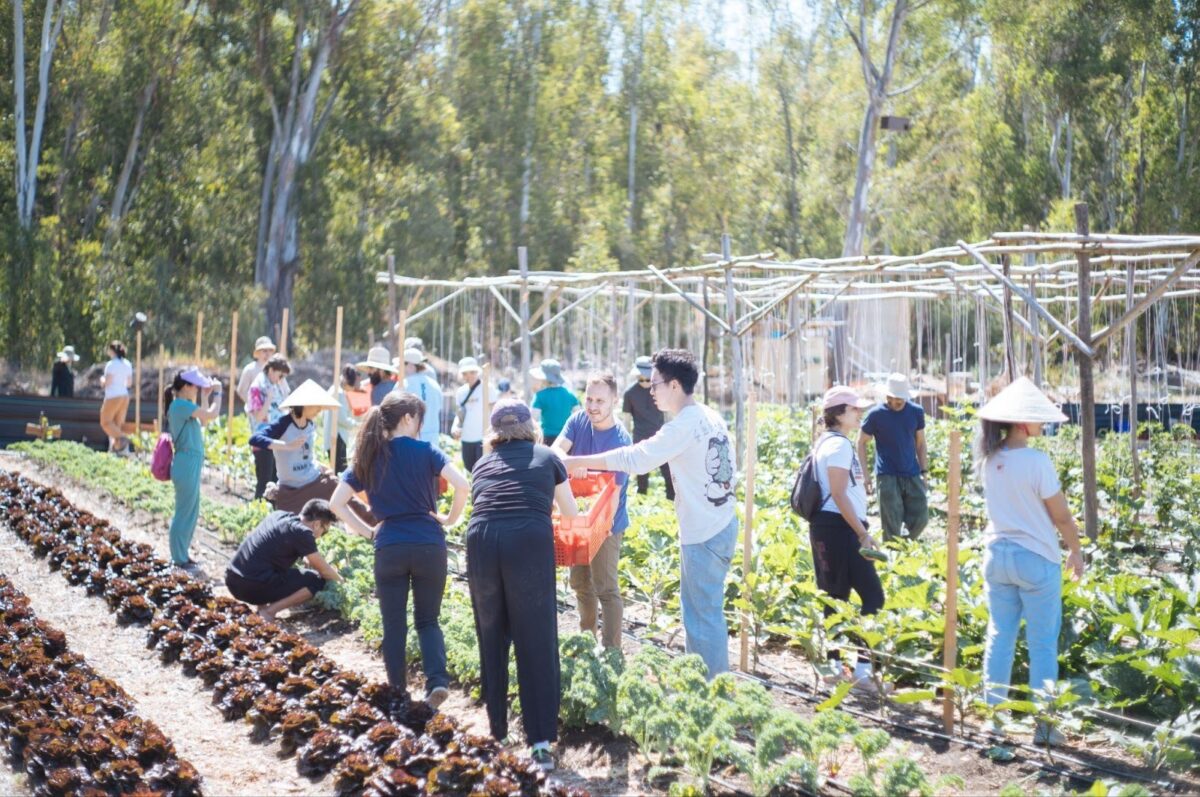
Brother Pháp Dung, senior monastic Dharma teacher at Deer Park Monastery, has been a mentor and supporter of our study group since its inception. He encouraged us to include an in-person gathering at Deer Park with our mentors and mentees during our study period. This gathering manifested in May 2025, with forty members of the study group in attendance. The gathering was a beautiful opportunity to cultivate love and understanding, not only amidst our study group members, but also with the monastic and lay community at Deer Park. As a key facet of our study group, we value learning how we can build safe, inclusive bridges between our lay and monastic communities. This includes looking into how we as lay practitioners can show up at a monastic practice center in a way that allows us to take refuge and also is supportive of our monastic siblings, who care for and live full-time in that space. We invited everyone in our study group to be respectful and mindful that Deer Park Monastery is the monastics’ home, and that we are guests being graciously hosted. In this spirit, we joined the center’s daily working meditation, morning/evening sitting, and walking meditation—while also having our own activities such as Dharma talks with senior monastics and Dharma sharing. We invited the monastics to join our activities if they were interested. Flowing with the center’s schedule, as we engaged in our own activities, fostered a sense of mutual respect and care with the monastic community—resulting in many shared moments of joy, practice, and an invitation/intention to return for another gathering!
Reverence for practice, mixed with Wake Up vibes!
During our gathering at Deer Park Monastery, we shared the practices typical of an OI retreat: sitting in silence with the rising sun, listening to Dharma talks offered by the monastics, and reflecting on the history of The Fourteen Mindfulness Trainings and the Order of Interbeing. There was a clear earnestness to practice deeply, honor our tradition, and offer goodness to the world.
And yet, this gathering was also uniquely Wake Up. We howled with the coyotes, baked pizzas with monastic brothers for the sangha, and enjoyed a beach outing on “lazy day.” We sang Disney songs with abandon, played volleyball during downtime, and let crayons and construction paper reveal our deepest aspirations. In these moments of play, we touched the lightness of our inner child, reminding one another that joy, too, is a form of practice.
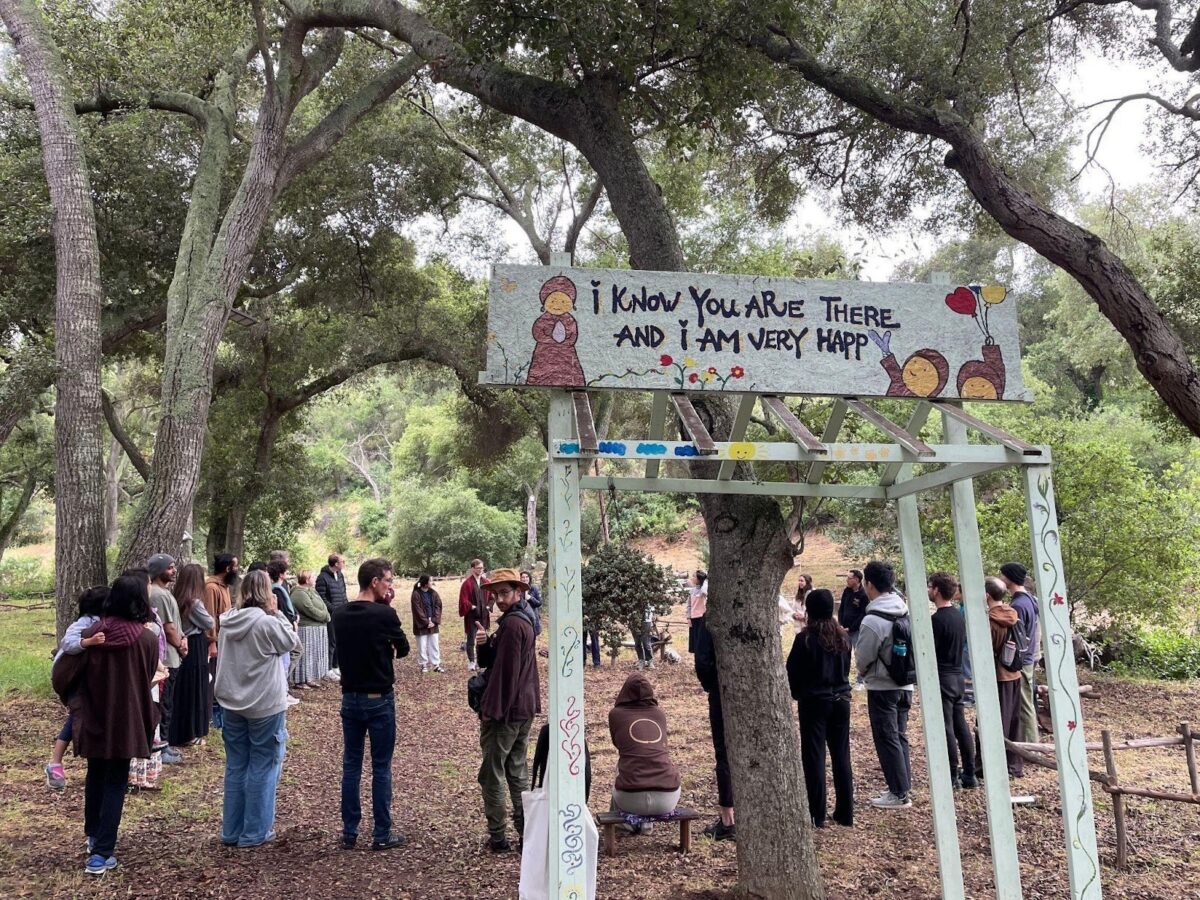
On the final morning, we stood hand in hand beneath the oak grove of Clarity Hamlet. One by one, we offered our collective aspiration—to transform our personal suffering and the suffering of the world. Nearby, a sign read, “I know you are there and I am very happy.” As we looked into each other’s bright eyes, the truth of those words came alive. Love, support, and a fierce tenderness moved between us, sealing our intention forevermore.
Intergenerational nourishment: sharing with Sister Chân Không
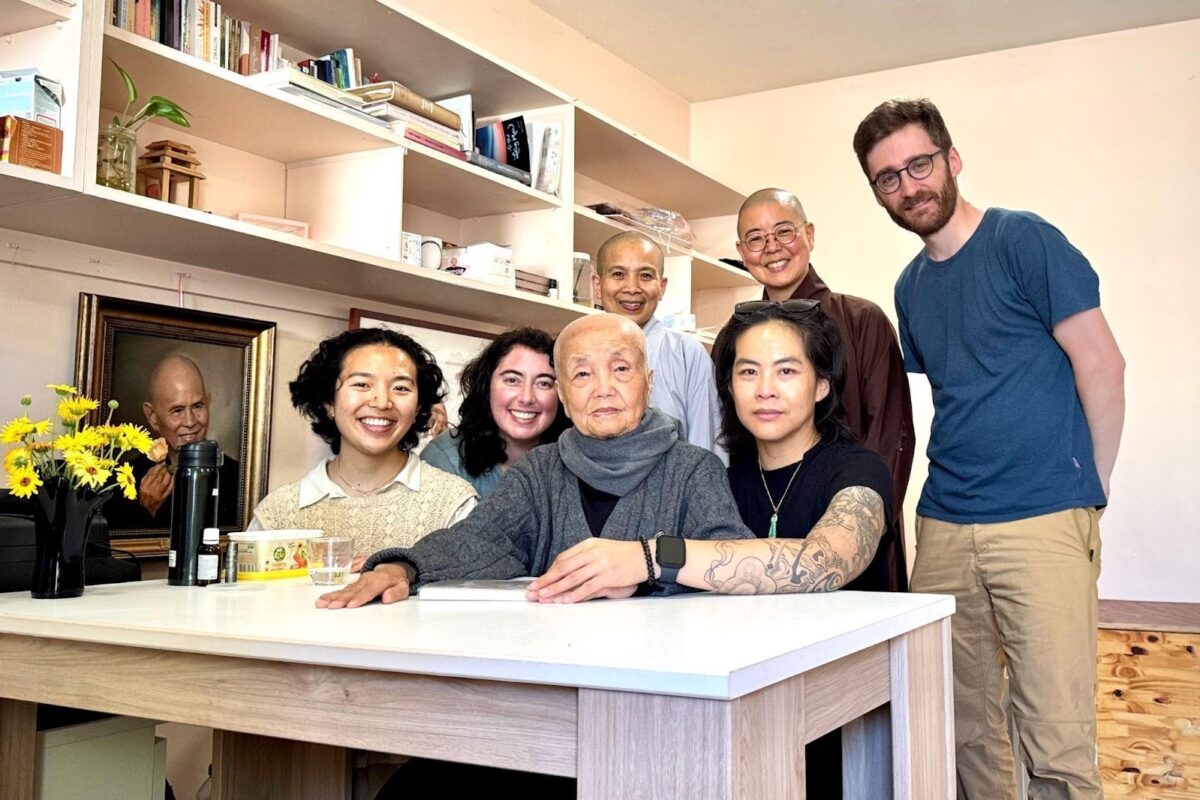
In June 2025, about a month after our Deer Park gathering, Elli and her husband Rob (OI member, Wake Up facilitator, and study group pod leader) travelled to Plum Village, France, where she helped organize a science retreat with the brothers and sisters in Upper and Lower Hamlets. We printed photos from our Deer Park Wake Up OI study group gathering to share with Sister Chân Không and Sister Chân Đức (Sister Annabel).
A few days after the retreat, Elli and Rob were invited to visit with Sister Chân Không in New Hamlet. They sat with her, along with fellow Wake Uppers Nho (former monastic, current PhD candidate at Harvard University) and Suzzane (OI aspirant, medical student at University of Oslo Faculty of Medicine, Norway), Sister Định Nghiêm, and Sister Trai Nghiêm, for over forty-five minutes as she slowly and lovingly flipped through the photo album. As Sister Chân Không looked through the photos, a smile bloomed on her face. She gently pointed to each young person, asking to be told their story. Quietly and peacefully Elli and Rob shared about their lives and deep commitment to study and practice The Fourteen Mindfulness Trainings. They told her about Arvind, an amazing young PhD candidate in artificial intelligence in New York City, New York, and about the sangha house in Los Angeles, California where many young, queer, fabulous practitioners are harmoniously living together. Over and over, Sister Chân Không said how happy she was that all these young people were diligently practicing. She shared that hearing about them made her touch the impact of her life’s work. Toward the end of the visit, she asked if the organizers would bring all of the young ones to come play with her. We have planted the seeds for our study group mentors and mentees to attend the sixtieth anniversary of the Order of Interbeing in Plum Village in June 2026. What a beautiful, intergenerational family gathering that will be!
As I reflect on this precious moment with Sister Chân Không, I feel both the joy and tears that filled me. Sitting with our beloved eldest sister, along with Sister Dien Nghiêm, Rob, and two other beloved Wake Uppers, Nho Anh Nguyen and Suzzane from Wake Up Netherlands, I felt Thầy’s presence and also missed him dearly.
–Elli
Request for support, gratitude, love, and trust
One of the challenges of being a Wake Up member is that we are not always taken seriously for our capacity to practice deeply. At times, older sangha members have questioned whether we truly hold the sangha’s best interests at heart—perhaps because of our youth, our fewer years of practice, or our tendency to creatively challenge familiar ways of doing things. This caution comes from a desire to protect the sangha, and it is completely understandable.
We hope that the greater community can come to know our generation and learn to trust us, just as Thầy placed his trust in the young ones. The very first members of the Order of Interbeing were in their early twenties, and Thầy entrusted them to challenge the status quo and carry the light of the Dharma in the midst of the war in Vietnam. In some ways, while we find ourselves with different kinds of crisis and war today—we are still at our core faced with addressing hatred, anger, ignorance, and fear.
We humbly wish to recognize that we are in the initial phase of exploring what it means to mentor young aspirants at this moment in space and time—with its own unique challenges/suffering, new technologies, and ways of seeing and looking at the world. Our deep aspiration is to walk the OI path, continuing to look with openness, to transform our own suffering and misperceptions, to listen deeply and be responsive to the next generation’s suffering and aspirations, to learn, to (un)learn, and to grow together as one cell in our mahasangha body so we can be of service to ourselves and to the world—including our ancestral, blood, spiritual, and land communities.
One of the most beautiful manifestations of organizing this study group has been experiencing precious moments of connection across generations of practitioners in our lineage. It is a true happiness and a gift to touch the love, support, and care of everyone flowing in this river of the Plum Village tradition. To the Dharma teachers, Wake Up OI members and aspirants, the wider mahasangha of monastic and lay practitioners: we know you are all there, and this makes us so happy.
Please support us in carrying this flame forward so that it may continue to bring understanding, compassion, and healing to all beings in the world.
With love and trust,
Elli Weisbaum and Như-Mai Nguyễn
Wake Up is an active global community, an initiative started by Thích Nhất Hạnh and the monastics of Plum Village, of young mindfulness practitioners (in their twenties and thirties) who practice in the tradition of Plum Village. We come together to practice mindfulness in order to take care of ourselves, nourish happiness, and contribute to building a healthier and more compassionate society. For more information visit: wkup.org
Written with the support and sangha eyes of Pablo Seto (he/him), Logan Mitchel (they/them), Elle King (she/her), Rob Walsh (he/him), and Nho Anh Tran (she/her).
With thanks to all our OI study group mentors, mentees, and Dharma teachers—lay and monastic—who have shown up and supported us across this Wake OI Study Group adventure thus far.
And an additional shout-out to our amazing siblings organizing the next International Wake Up OI study group, which launched in Fall 2025, with ninety respondents to the initial invitation survey! We are so grateful for the mutual support, love, and trust we are cultivating globally to continue to walk this path together.