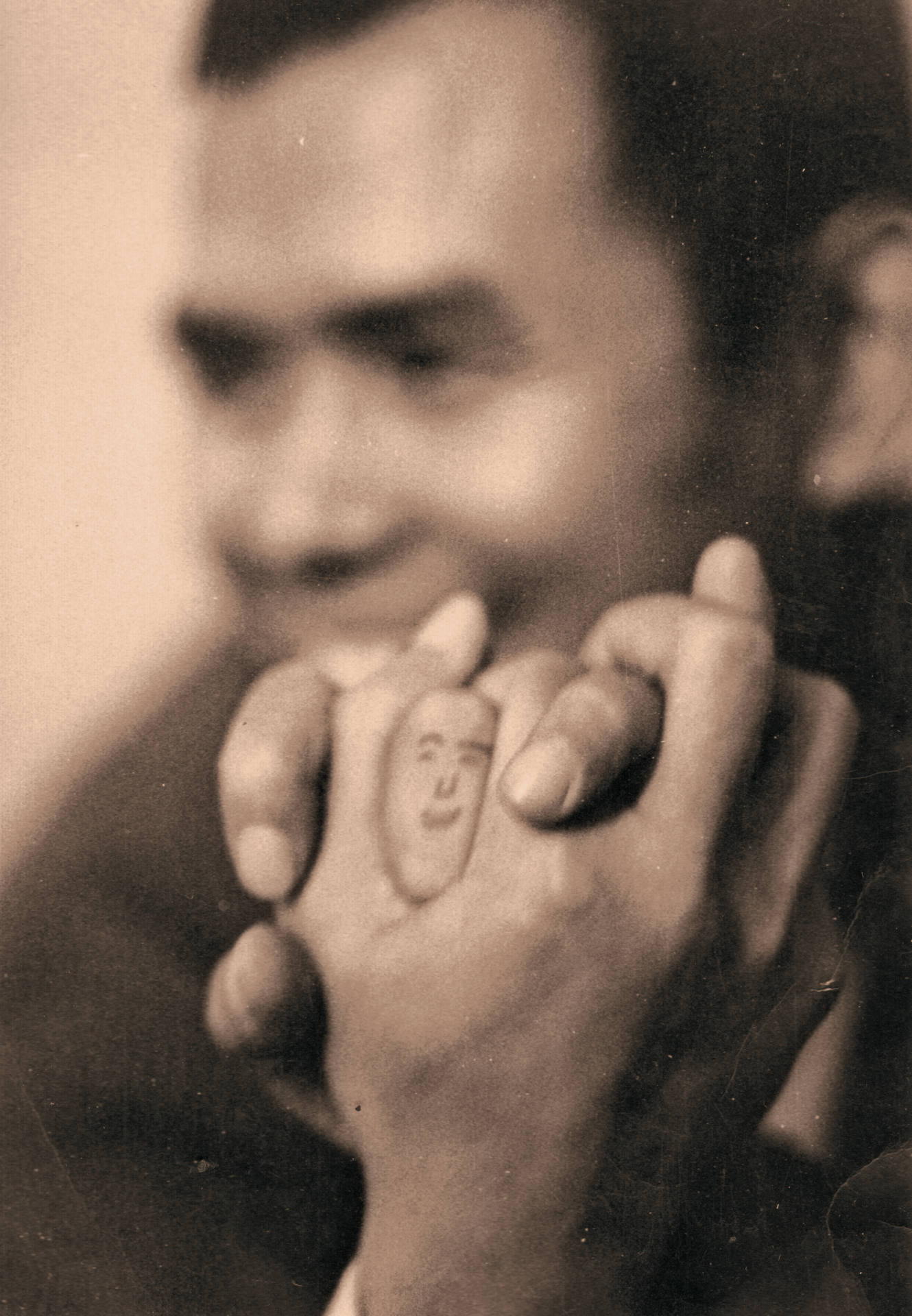
From his biography, published only in Vietnamese, this excerpt describes Thích Nhất Hạnh’s life leading up to a pivotal moment—the decision not to self-immolate.
Preparing for “a Cold Winter”
[In 1962,] Thầy stayed an additional year in the United States to continue his studies at Union Theological Seminary, affiliated with Columbia University. There, Thầy had the opportunity to acquaint himself with the ideas of modern theologians such as Karl Barth, Paul Tillich,
From his biography, published only in Vietnamese, this excerpt describes Thích Nhất Hạnh’s life leading up to a pivotal moment—the decision not to self-immolate.
Preparing for “a Cold Winter”
[In 1962,] Thầy stayed an additional year in the United States to continue his studies at Union Theological Seminary, affiliated with Columbia University. There, Thầy had the opportunity to acquaint himself with the ideas of modern theologians such as Karl Barth, Paul Tillich, and Martin Buber. Thầy also took advantage of the rich Buddhist resources stored in the Butler Library and further studied the Pali language. His main professors in the department were Professor Horace Friess and Professor Anton Zigmund-Cerbu. Professor Cerbu, a distinguished Swiss scholar and an expert in East Asian religions, was proficient in about forty languages, including Vietnamese, Chinese, and Sanskrit.1 Both professors were delighted to hear Thầy present thoughts about St. Thomas Aquinas’ works Summa Contra Gentiles through the eyes of a meditator. The topic Professor Cerbu chose for Thầy’s thesis was Epistemology in Yogacara (Vijnanavada). Having studied and taught Yogacara for six years at the Buddhist Institute, Thầy completed the dissertation in twenty-one days. Professor Cerbu often invited Thầy for dinner, and they exchanged many stories in French.
Professor Friess was also close to Thầy and provided special support. He entrusted Thầy with teaching a course at the graduate level. Subsequently, he often encouraged Thầy to engage with the faculty, such as dining with them and giving presentations. The students studying with Thầy were endearing and studious. Among them were Catholic monks and a professor at Manhattan College.
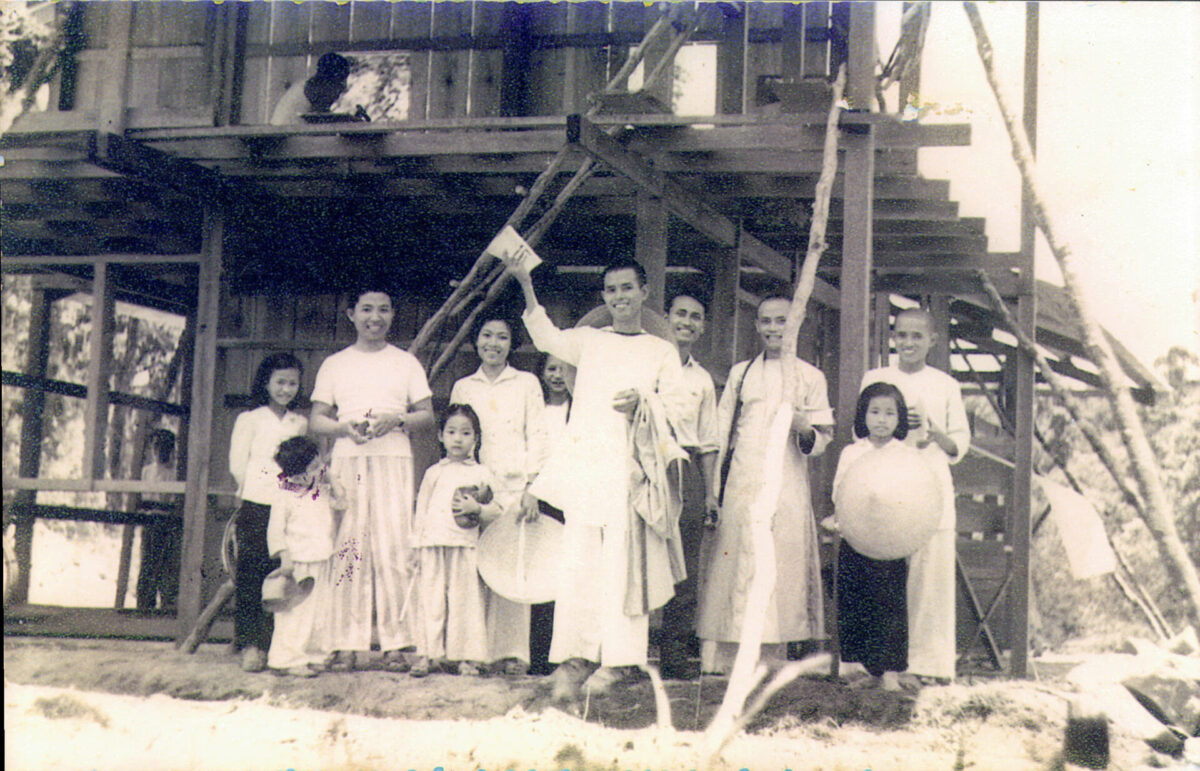
Thầy also taught five hours per week and sat in the office to help students collect documents they needed. He rented a flat near the campus. Steve Headley, an American student born in Bryn Mawr, Pennsylvania, was particularly fond of Thầy and requested to share the rented apartment. The two lived together, exchanged ideas, and supported each other amicably. Steve listened attentively to the situation in Vietnam, even expressing a wish to go back there with Thầy and visit Fragrant Palm Leaves Hermitage (Phương Bối). He began to learn Vietnamese and even wished to enroll in the Higher Institute of Buddhist Studies Thầy planned to establish in Vietnam. Steve also learned to apply Vicks VapoRub to give a gua sha (cạo gió) treatment to Thầy whenever he caught a cold.
That year, as autumn shifted into winter, Thầy contemplated the rows of bare trees and had a premonition about what was to come. He learned a lesson from the trees’ silent endurance:
A frozen winter will arrive, and it will not pardon the small, young, tender green leaves and any outer show. We have to transcend the stage of young, tender green leaves and all outer show in order to endure. One must be experienced, mature, solitary, and prepared to endure hardship with gritted teeth. [...] Our country will inevitably go through a devastating storm. [...] The waves and winds can come at any time. We cannot be heedless, or unthinking. We must emulate those trees, shedding all our outer leaves to withstand storms, rains, and snow. We can no longer afford to be small, tender young leaves. We must be experienced, endure hardships, and be steadfast to overcome the forthcoming challenges.2
In the weeks that followed, Thầy often had strange nightmares.
Sometime after that, on the night of November 2, 1962, Thầy stayed awake to read about the life and philosophy of Dietrich Bonhoeffer, a German theologian and protestant minister (1906-1945), who was imprisoned and executed by the Nazis at the age of thirty-nine. Bonhoeffer’s peace, compassion, and courage in his final days in the concentration camp profoundly moved Thầy:
I stayed up late into the night to read about Bonhoeffer, and the last phase of his life helped me awaken to a clear horizon, full of shining stars, which is already there in everyone’s spirit. I suddenly felt an unusual joy, and a clear conviction that I could endure the greatest sufferings that I normally could not or have not yet been able to bear. [...] Bonhoeffer was just the last drop that made my cup overflow, the final cause, a gentle breeze that allows the ripe fruit to fall. Living through such a night, one should not complain or blame anything in this world. [...] Courage and energy overflowed; I saw my brain and heart as flowers. All the emotions and the suffering that shake us manifest in a wonderful way and still we know that this body is our body. [...] Life is wonderful and suffering is also wonderful. Life would be ugly, dark, and impossible without suffering.2
In light of the extraordinary humility and courage of Bonhoeffer, Thầy recognized the presence of bodhisattvas right here on our Mother Earth, not just in the sutras. For a month, Thầy meditated on the images of the bodhisattvas in the Lotus Sutra and the Prajñāpāramitā Sutras. Thầy realized that these bodhisattvas were not distant, remote superhuman deities but humans we could encounter in this very life, even among the young people whom Thầy was guiding in Vietnam. These young people were bringing ideals of understanding and love into their lives, striving and acting to alleviate the ongoing suffering around them. Thầy initiated the aspiration to nurture these young people. He began planning teachings and programs of study to support them when returning to Vietnam. Thầy contemplated writing a book with the title Engaged Buddhism.
The Nonviolent Struggle
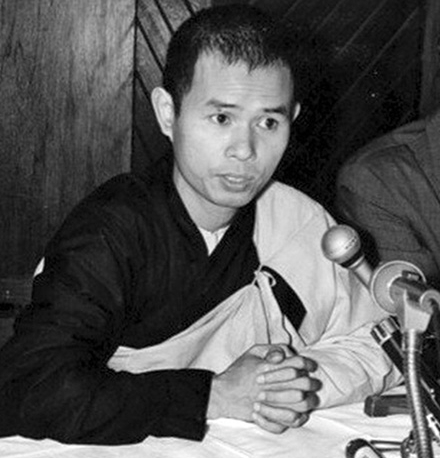
Thầy’s premonitions during the previous winter came to pass. In mid-May 1963, Thầy received a collection of documents on the repression of Buddhism in Vietnam. Before Vesak Day that year, the Ngô Đình Diệm regime prohibited Buddhists from hanging Buddhist flags. On the night before Vesak, the authorities also stopped the Buddhist broadcast on the radio station in Huế. The military used armored cars and guns to suppress the crowd gathered in front of the radio station. Nine people were killed, two of whom were children, and an additional four were severely injured.3 The nonviolent struggle by Buddhists for religious freedom and social justice began from this point, and in three days, it had turned into a nationwide movement. Thầy’s root teacher, Zen Master Thích Chân Thật, along with many other senior monks in Vietnam, jointly participated in the protests against this oppressive action.
In the United States, friends like Steve, Reverend Donald S. Harrington, Professor Windmiller, Professor Robert S. Browne, Trương Ngọc Bích, and Lê Thị Bạch Lan assisted Thầy in translating and presenting a comprehensive set of documents. Thầy printed the documents and sent them to 101 delegations of the different countries represented at the United Nations, to lobby for a UN delegation to investigate the repression of Buddhism and human rights violations in Vietnam. Thầy also wrote a letter to daily newspapers in the United States, speaking of the suffering that the people and Buddhists in particular had to endure under the Ngô Đình Diệm regime. Thầy gave many lectures and interviews for the media and became an active spokesperson for the Buddhist Peace Movement happening in Vietnam at that time.
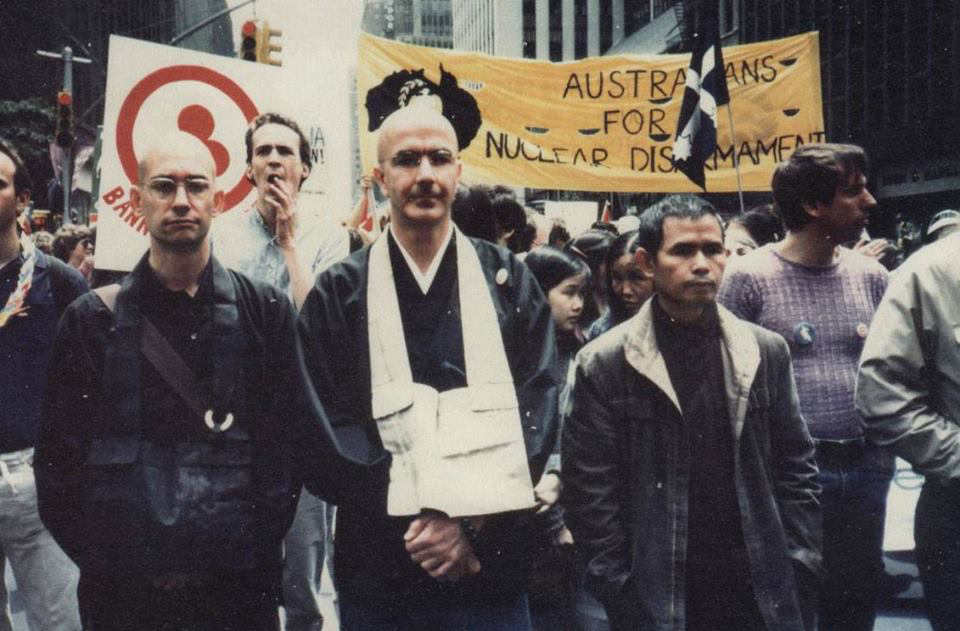
On June 12, 1963, Thầy was shocked to see in The New York Times that the Venerable Thích Quảng Đức, sixty-six years old, had self-immolated in the middle of a street in Sài Gòn. Thầy remembered his first meeting with the Venerable in Nha Trang and the time they lived together at the Long Vĩnh temple in Sài Gòn. One day, while sitting at his desk, Thầy Quảng Đức entered Thầy Nhất Hạnh’s room unnoticed, came close, and kissed him on the head. Deeply moved, he turned, took Thầy Quảng Đức’s hands, invited him to sit, and they talked about the situation of Buddhism in the country. Now, images and news of the Venerable’s self-immolation flooded international television and newspapers. The world was shaken. Thầy reached out to Vietnamese communities in the United States, and approached the Society of Catholic Students in Chicago so that together they could coordinate their efforts in this campaign, and he received their support.
By August 1963, Thầy received news of the self-immolations of more monks and nuns, such as Thầy Nguyên Hương, Thầy Thanh Tuệ, Sư Cô Diệu Quang, and Thầy Tiêu Diêu. Over one thousand monks and nuns were oppressed, arrested, and imprisoned by the authorities, and hundreds went missing. The Most Venerable Thích Tịnh Khiết, the President of the General Assembly of Vietnamese Buddhism, was also arrested. In this moment of intense suffering, Thầy had to practice walking meditation for several days in Riverside Park. Ultimately, Thầy decided he would self-immolate within the next seven days to mobilize the peace movement in the United States. He arranged everything. He knew that with this act, he would not betray the trust of those he loved, even though the news might cause them pain. Yet, Thầy’s current position was at an international crossroads, and he felt his action could create a significant impact.
On the afternoon of August 25, 1963, Thầy walked through the streets with the awareness that he would no longer walk here within a week. Thầy walked with clear awareness. He saw life with all its wonders, walking on the Earth, but feeling as if he were walking on clouds. This feeling, this awareness, Thầy would later partially express in a prose poem commemorating Nhất Chi Mai, a lay disciple in Thầy’s Order of Interbeing, who self-immolated for peace in 1967:
In the morning, the sun is there, oh cosmos, I want to hold you in my two arms …
The next morning, Thầy met Professor Friess at his office at Columbia University as usual. The professor asked Thầy about the situation in Vietnam. Thầy told him everything. The professor was silent for a long time. Then he looked up and asked, “So, what do you plan to do?”
Thầy was at a loss. Certainly, he could not tell the professor or anyone else. Thầy was also silent for a while. Finally, the professor looked at Thầy and said very calmly, “It’s good that you are here to help your fellow monks back home. They are all in prison now; what else can they do? Use your time and energy to advocate for them.” Thầy was startled. He sat still. The professor lightly touched Thầy’s shoulder and then went into his own office. Thầy went to his desk, took his letters, and walked home while deeply reflecting.
When Thầy reached 109th Street, he decided to abandon the idea of self-immolation. Thầy had his own way to serve the Dharma and the world.
The poem “Lửa đốt em tôi” (The Fire Is Burning My Little Brothers and Sisters) captures Thầy’s pain and determination to continue his activism for peace, including the lines:
... Fire is burning my little brothers and sisters,
Oh, their skin, their flesh,
Do you feel pain? My tears are not enough
To sprinkle on the flames, to cool your small, sacred soul.
I am still here, though the wounds are heavy
I carry the great vow to transmit to the future generation.
I am still here, we have promised never to betray your trust.
Did you hear that?—We will never betray your trust,
Because your heart has become my heart.
1 Professor Cerbu was three years older than Thầy. He passed away after a heart operation in November 1964, only a couple of months after Thầy returned to Vietnam. When Thầy heard the news, he was stunned, and wrote the poem “My brother died this morning” as a gift to Professor Cerbu.
2 translated from Nẻo về của ý (Fragrant Palm Leaves)
3 Seth Jacobs, Cold War Mandarin: Ngo Dinh Diem and the Origins of America’s War in Vietnam, 1950–1963 (Lanham: Rowman & Littlefield, 2006), 162-3.
This is an excerpt from Đi Gặp Mùa Xuân: Hành Trạng Thiền Sư Thích Nhất Hạnh, Niên Trưởng, Trú Trì Tổ đình Từ Hiếu, Khai Sơn Đạo Tràng Mai Thôn Quốc Tế (Encountering the Spring, The Life of Meditation Master Thích Nhất Hạnh, The Abbot of the Root Temple Từ Hiếu, Founder of the Plum Village International Practice Center), written by the Plum Village Sangha and published by ThaiHaBooks in 2022. This excerpt has been translated by Sister Chân Đức, with assistance from Brother Pháp Lưu and Tom Jennings (AI was used to aid the accuracy of the translation).