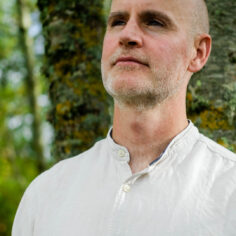
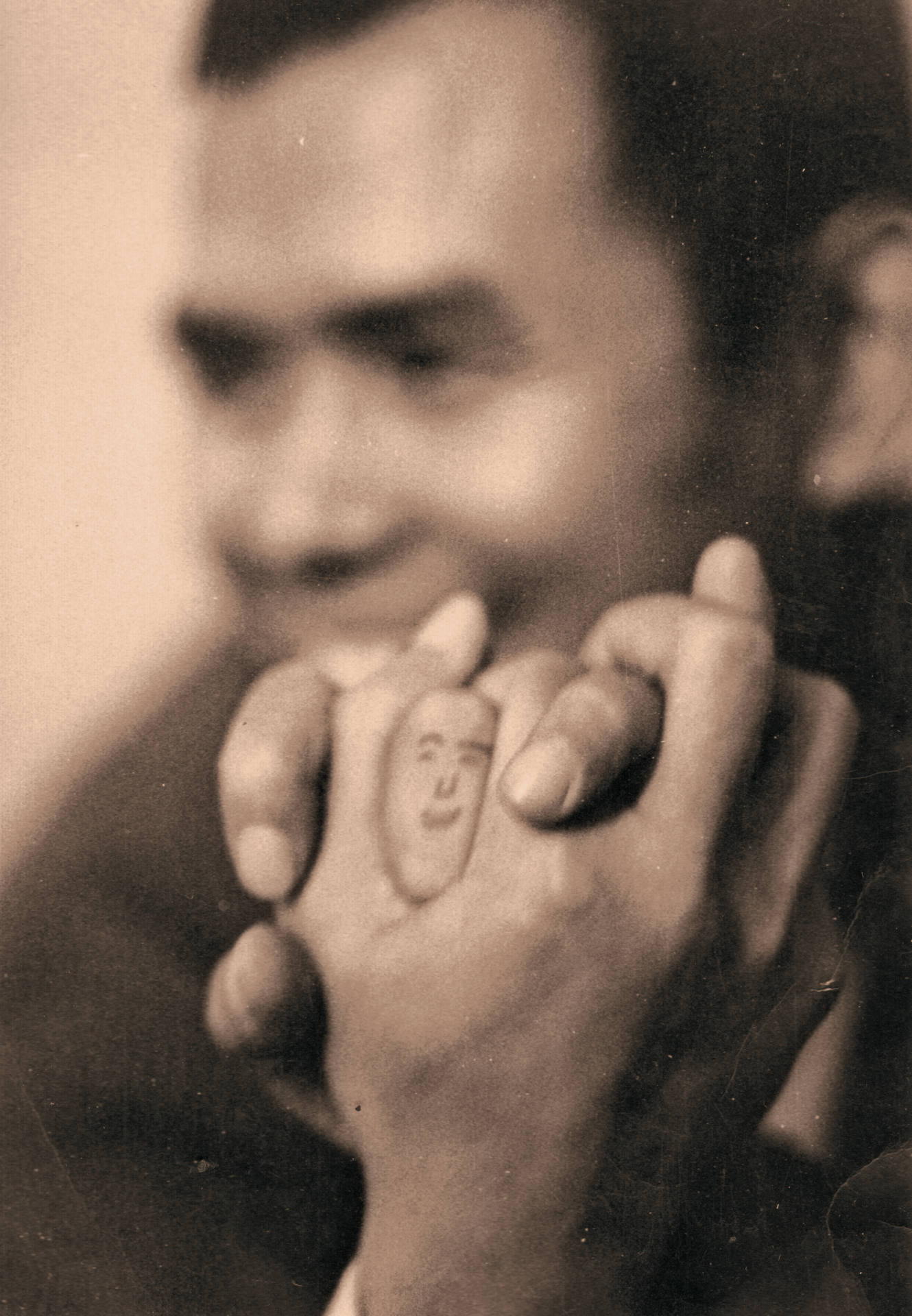
Reflections on Thích Nhất Hạnh’s experiences of conflict in Thầy’s home country, inspiring Mick McEvoy’s own practice of peace building and living in spiritual community both in Ireland and through the Happy Farm project in Plum Village, France.
There is much to celebrate when I think of one hundred years of Thích Nhất Hạnh. This man lived through so much hardship and many violent conflicts, including the French War in Vietnam, two world wars,
Reflections on Thích Nhất Hạnh’s experiences of conflict in Thầy’s home country, inspiring Mick McEvoy’s own practice of peace building and living in spiritual community both in Ireland and through the Happy Farm project in Plum Village, France.
There is much to celebrate when I think of one hundred years of Thích Nhất Hạnh. This man lived through so much hardship and many violent conflicts, including the French War in Vietnam, two world wars, and the American War in Vietnam. Thầy certainly was a Lotus in a Sea of Fire. I first met Thầy (along with seven hundred others) at a four-day residential retreat in Ireland in April 2012. In my own life, I was tending to a broken heart and emerging out of a decade-long spiritual vacuum, and I was curious and skeptical about the notion of organised, collective spiritual endeavours.
My home country, Ireland, was dealing with the fallout of the global recession that brought what was known as the “Celtic Tiger Economy” to its knees. This collapse led to increased social inequality, declining community life, and a rise in racism and xenophobia. For many, there was a return to experiences of poverty in contrast to the crassness of this recent era of material excess, which was previously unknown to Irish culture. The reality was a harsh lesson for our society and many were in deep pain. As the retreat began, Thầy offered words of wisdom and teachings to help many of us touch the reality of this pain as well as practices to help us transform our ill-being into expressions of individual and collective well-being.
There were many tears. My own tears began to flow when Thầy addressed the violence and division in the North of Ireland that had been a daily reality for the first twenty years of my life, up until our peace agreement was signed in April 1998. In the North of Ireland, we still live in a post-conflict society. Even as recently as April 2026, those who choose violence to pursue their aims of a united Ireland detonated a car bomb outside a police station in Belfast with the explicit aim of killing police officers who they perceived to represent the occupying British state in the north of Ireland.
After the four-day retreat ended, Thầy and the community headed north to Belfast, the city I called home at that time. Thầy was invited to Stormont, home to our devolved Parliament of Northern Ireland, to address the politicians and share about peace building, nonviolence, and reconciliation. Our devolved Parliament was created after our peace agreement was signed fourteen years ago and is made up of democratically elected politicians who represent the diversity of our community. I was able to attend the event in the Senate Chamber as I was an active member of the Irish Green Party, which was also part of the Parliament. It was an intimate affair of perhaps one hundred people. Stormont is a huge, austere building with Greek Classical and Neoclassical design. It sits atop a hill overlooking the city of Belfast and for many, including myself, it represents a dominant political reminder that this land is claimed by Britain and their Empire.
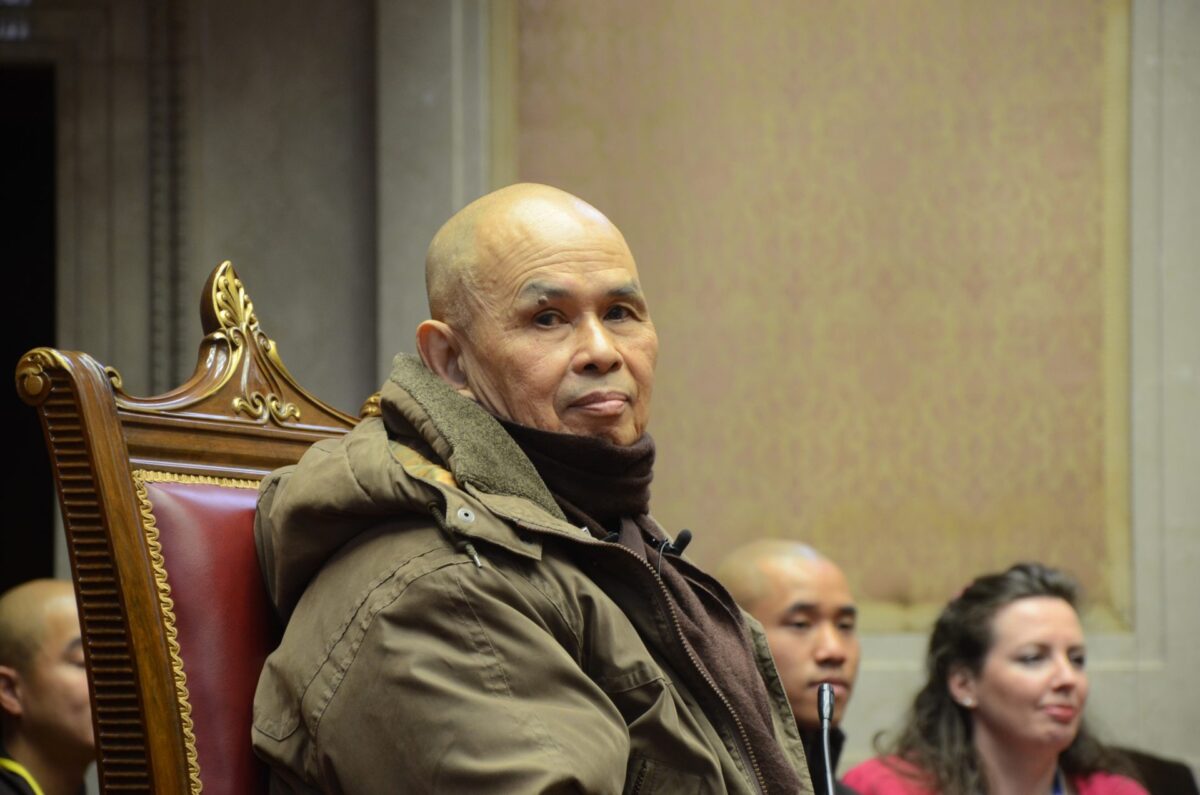
It was quite a scene. Thầy, a small, smiling, and gentle man in his eighties, wearing an old brown coat, sat in a huge ceremonial chair contrasted with the dominant energy that had emanated from Stormont for nearly a century as the seat of British rule in the North of Ireland. This was a remarkable cultural and political happening unfolding in my home city. The surreal nature of the day continued when Thầy was introduced by Irish politician Martina Anderson, who was an elected Member of the European Parliament. Martina Anderson was a member of the political party called Sinn Féin who advocated for a United Socialist Republic of Ireland, wherein Northern Ireland, which is legally part of the United Kingdom, would be united with the Republic of Ireland. Whilst now a democratically elected politician, Martina Anderson has shared that she was once a proud member of the IRA, which she joined in 1979. She was convicted of conspiracy to cause explosions in Great Britain as part of the decades-long violent campaign of the IRA and was in jail for thirteen years before being released under the terms of our peace agreement.
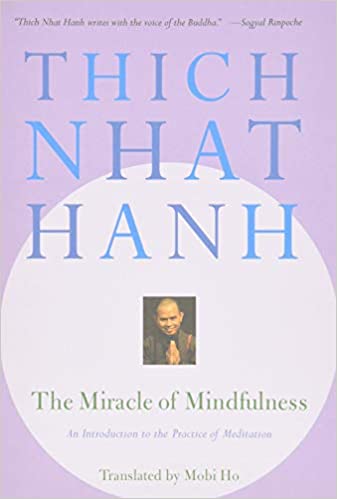
As Martina Anderson began to introduce Thầy, she reached into her pocket and produced a very old and dog-eared copy of one of Thầy’s earliest books, The Miracle of Mindfulness. Anderson went on to share that she had been gifted this book by a friend during her time in prison in Durham, England, and she was one of a group of imprisoned Sinn Féin leaders who adopted Thầy’s teachings whilst being in prison. Holding the book, she shared how the teachings within it had helped her survive the years she was locked up in jail and how these teachings continue to guide her in her work of peace building and reconciliation in Ireland. Thầy was clearly moved, and I myself felt deeply surprised and touched by this moment. I felt my tears flowing and embraced them as I witnessed how this spiritual elder, who had been exiled from his home for his advocacy of non-violence, continued to offer his time and energy to share the practices of peace building and reconciliation with my community in Ireland that had inherited a legacy of violent conflict and division that extended backwards for over four centuries. I felt blessed to be in the room on that day.
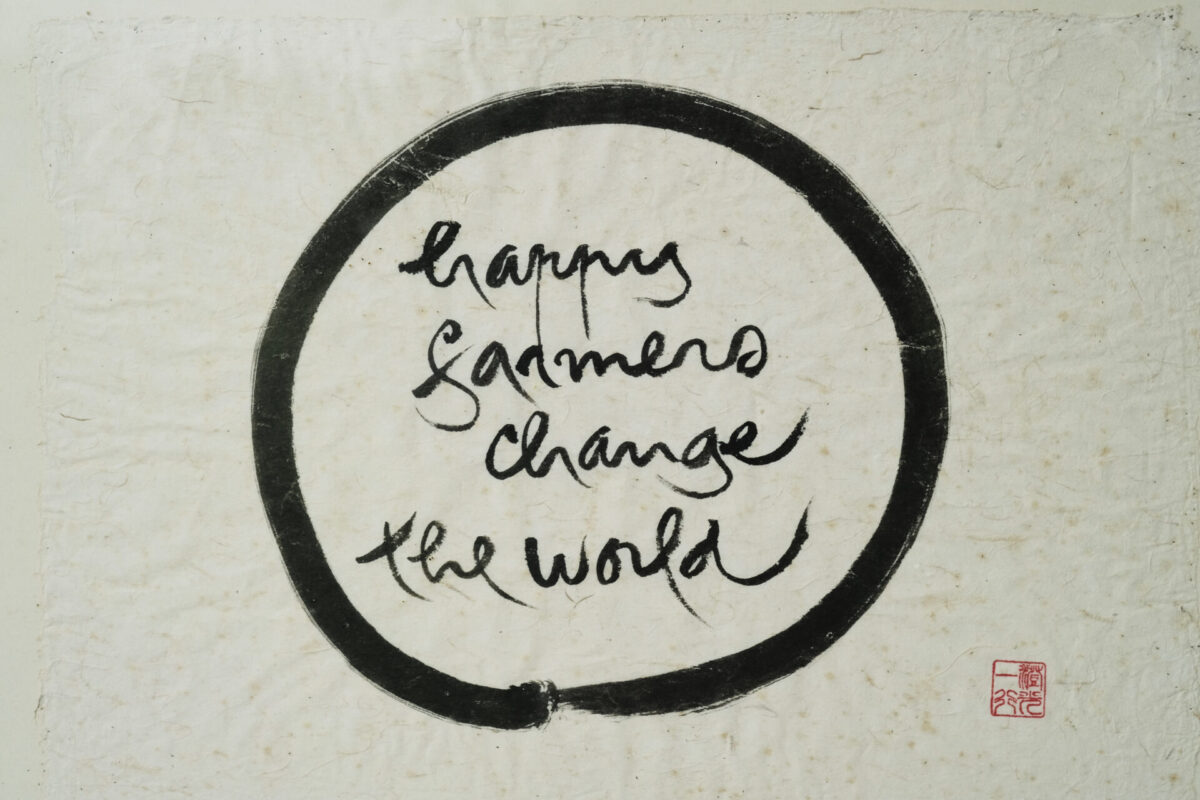
A small but abundant part of Thầy’s legacy is the Happy Farm project. Thầy was a trailblazer. He started the Happy Farm project and then entrusted it to the community. He told us, “Happy farmers change the world.” Growing food whilst growing community is a common aspect of the peace building movement in the North of Ireland. We often joke about “giving peas a chance.” Peace building can be as simple as growing, cooking, and eating peace meals together, gathering people from different communities and identities, and sharing space and food together. This was my livelihood and passion in the North of Ireland for the five years before I moved to Plum Village in 2015.
As the founder of our Plum Village tradition, Thầy was often introduced as a gardener, poet, and peace activist. We are all familiar with the metaphors and imagery of the garden and gardeners that Thầy skilfully deployed in his teachings over the decades. In this global community he shared that “we are all flowers in the garden of humanity.”1 I heard a story many years ago that Thầy chose the colour brown for the monastic robes of Plum Village, and perhaps also for the Order of Interbeing (OI) jacket, as a way of being in solidarity with the farmers of Vietnam. The colour brown also represents the colour of the soil and of the Earth. This is a declaration of humility, encouraging us all, monastic and lay, to live a simple life in touch with the soil, connected to Earth.
… in reality, all of us human beings are in fact “soil beings.” Returning to this most humbling communion is the ground on which we all stand.
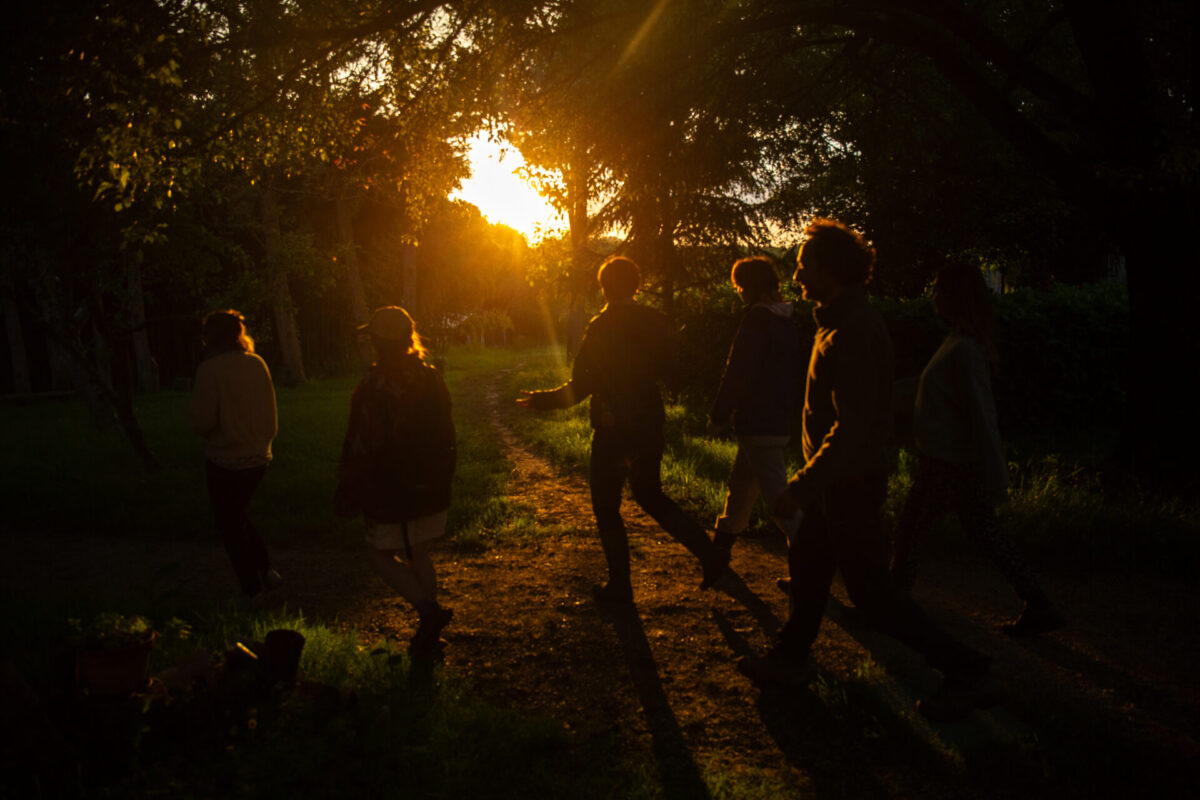
There have been fourteen years of continuous cultivation of the soil at Plum Village Happy Farm in Upper Hamlet. Cultivating the soil to nourish the community whilst simultaneously cultivating our inner gardens has involved thousands of people, including monks, nuns, lay residents and guests, adults, teens, and children. Over these years, the Happy Farms of Upper Hamlet, Lower Hamlet, New Hamlet, and now Deer Park Monastery have curated and facilitated countless retreats with the support of the sangha. In 2025 in Upper Hamlet Happy Farm, we had the conditions to host over 160 guests during our retreats as well as hundreds of children during the Summer Retreat.
The Happy Farms, like the OI and the School of Youth for Social Service before it, are primarily led by lay practitioners. We have lay members of our community leading with love in the three hamlets of Plum Village France, Deer Park Monastery, and soon the Being Peace Centre in the UK. We continue to offer transformative one-year residential Happy Farm programmes and shorter term residential volunteering. We also offer opportunities for our neighbours to join us to farm and practice together as we all continue on our pathways of healing and transformation, supported by the Earth. The main pillars supporting the Happy Farm project remain as they were when Thầy outlined them for us back when we began in 2013. We aim to grow organic, healthy, nutrient-dense, and seasonal food for the Plum Village community. We aim to integrate the ethics and practices of the Dharma into our work and service whilst together on the farms. We aim to offer education and opportunities for lived experiences in regenerative farming, rewilding, nature connection, and the living Dharma. Last, but far from least, we aim to offer the unique opportunity to live and grow together in spiritual community.
The word human is derived from the word humus, the dark organic matter in soil that is formed by the decomposition of plant and animal matter. Humus is the life-giving element of our soils from which all plants grow. The word humility is also derived from the word humus. In the words of Vandana Shiva, “To be truly human is to be of the soil and to be truly human is to be humble.”2
So in reality, all of us human beings are in fact “soil beings.” Returning to this most humbling communion is the ground on which we all stand. For myself and the thousands of soil beings who have spent time practicing with the Happy Farm project, our healing and transformation is in union with the healing and transformation of the soil on which we farm.
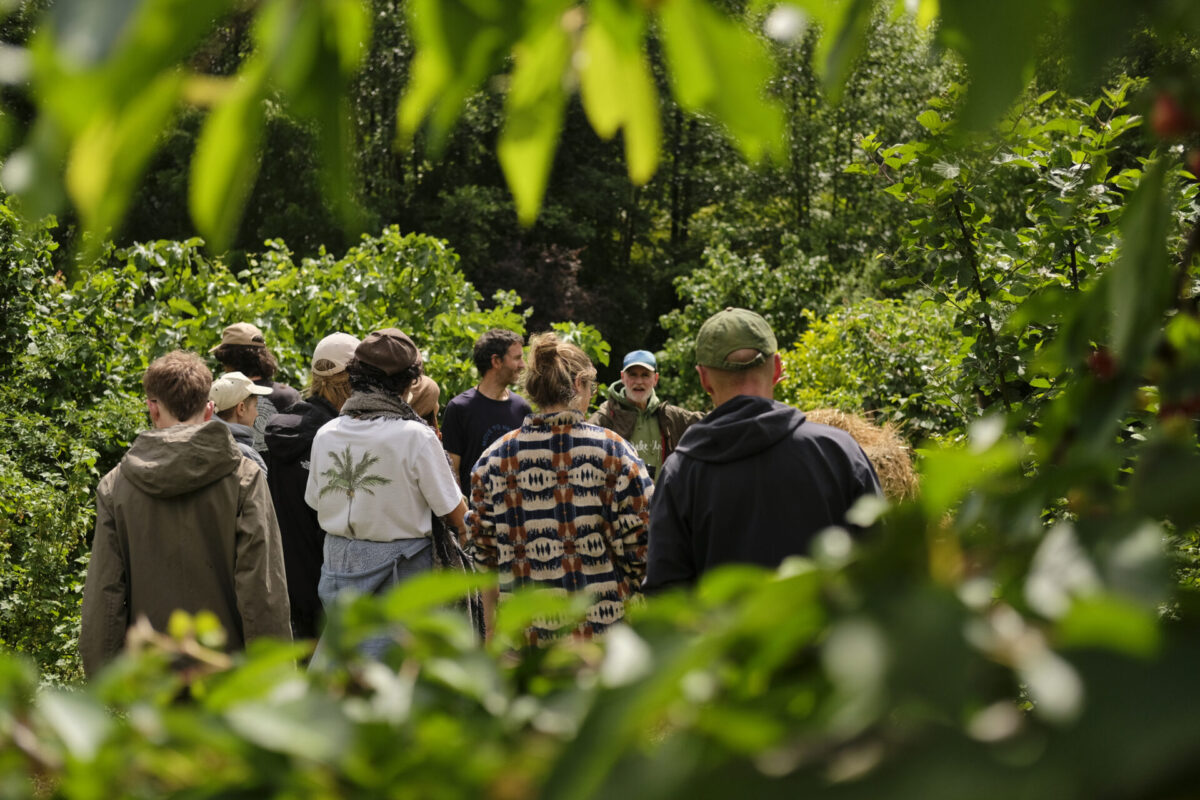
Remembering that our Plum Village and Happy Farm spiritual practices are manifestations of an open source spiritual technology, I encourage those who may be inspired to cultivate the Happy Farm practice in your lives and in your communities to begin. Start a food garden or a farm. Plant that garden with the applied ethics and practices of our Plum Village tradition and harvest the abundance of healing and transformation for yourself, your loved ones, and your community. For those of you with the suitable conditions and the desire to do so, perhaps bring it into your own livelihood. Offer Days of Mindfulness in your gardens and farms, and cultivate these seeds as an expression of Right Livelihood.
Continue to support the healing and transformation of so many soil beings and our Earth.
Because as Thầy declared, “Happy Farmers Change the World.”
1 Thích Nhất Hạnh, “Have I Got a True Home?,” Thich Nhat Hanh Dharma Talks, December, 28, 2013, tnhaudio.org/2013/12/28/got-true-home
2 Vandana Shiva, “What is the true meaning on humility?,” Science and Nonduality, YouTube, May 22, 2025, youtube.com/watch?v=sQvbnJbWugU