By Thich Nhat Hanh on
Each of us needs a sangha. If we don’t have a good sangha yet, we should spend our time and energy building one. If you are a psychotherapist, a doctor, a social worker, a peace worker, or if you are working for the environment, you need a sangha. Without a sangha, you will not have enough support, and you will burn out very soon.
By Thich Nhat Hanh on
Each of us needs a sangha. If we don’t have a good sangha yet, we should spend our time and energy building one. If you are a psychotherapist, a doctor, a social worker, a peace worker, or if you are working for the environment, you need a sangha. Without a sangha, you will not have enough support, and you will burn out very soon. A psychotherapist can choose among his or her clients who have overcome their difficulties, who recognize you as a friend, a brother, or a sister in order to form a group of people to practice as a sangha, to practice being together in peace and joy in a familial atmosphere. You need brothers and sisters in the practice in order to be nourished and supported. A sangha can help you in difficult moments. Your capacity of helping people can be seen by looking at those around you.
I have met psychotherapists who are not happy with their families, and I doubt very much that these therapists can help us if we need them. I proposed that they form a sangha. Among the members of this sangha are people who have profited and recovered from their illness and have become friends with the therapist. The Sangha is to meet and practice together—breathing, living mindfully and in peace, joy, and loving kindness. That would be a source of support and comfort for the therapist. Not only do meditators and therapists have to learn the art of sangha-building, every one of us needs to. I do not believe that you can go very far without a sangha. I am nourished by my sangha. Any achievement that can be seen in the sangha supports me and gives me more strength.
A sangha is a community of resistance, resisting the speed, violence, and unwholesome ways of living that are prevalent in our society.

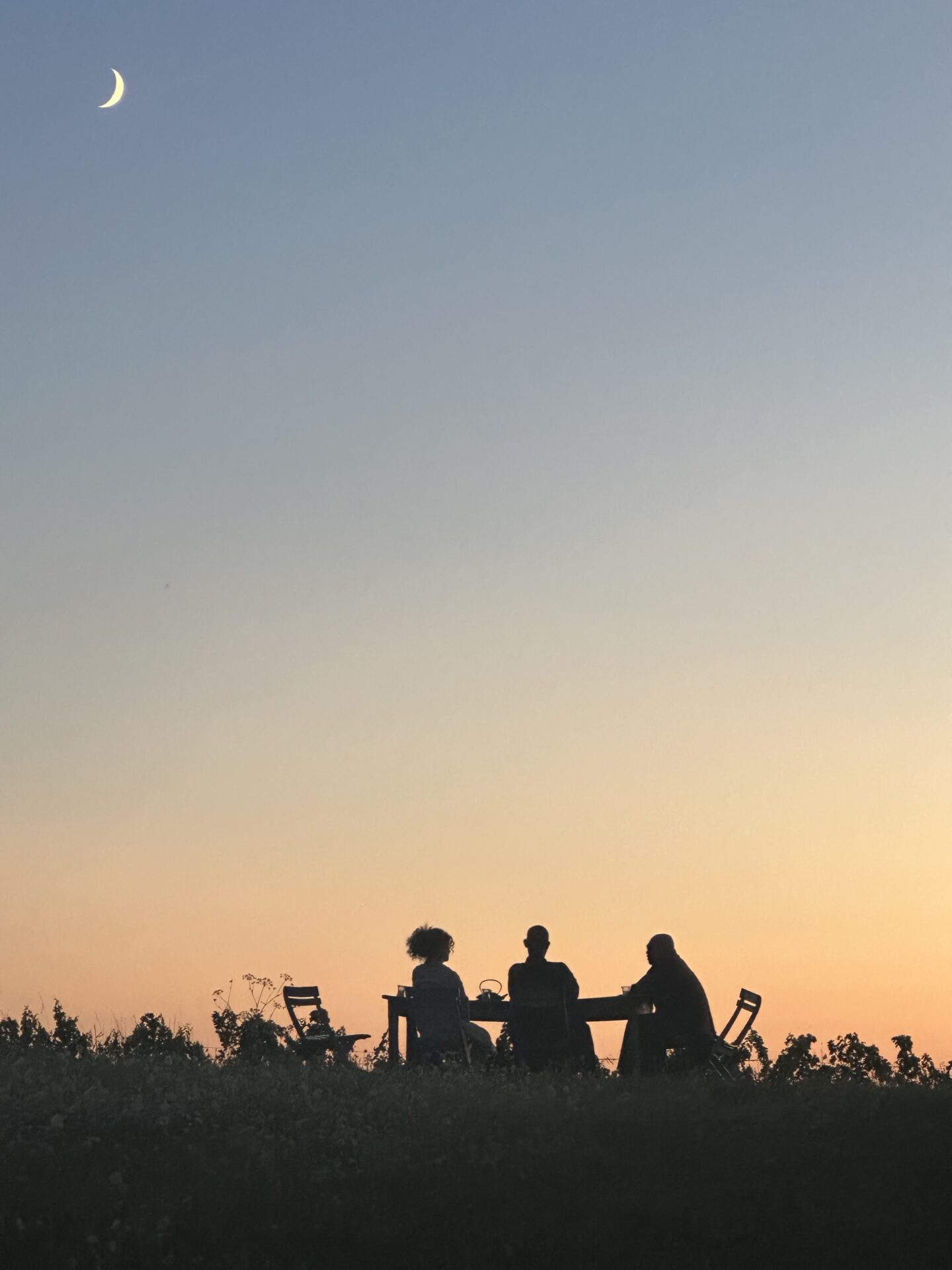
To build a sangha, begin by finding one friend who would like to join you in sitting or walking meditation, precept recitation, tea meditation, or a discussion. Eventually others will ask to join, and your small group can meet weekly or monthly at someone’s home. Some sanghas even find land and move to the countryside to start a retreat center. Of course, your sangha also includes the trees, the birds, the meditation cushion, the bell, and even the air you breathe—all the things that support you in the practice. It is a rare opportunity to be with people who practice deeply together. The sangha is a gem.
The principle is to organize in the way that is most enjoyable for everyone. You will never find a perfect sangha. An imperfect sangha is good enough. Rather than complain too much about your sangha, do your best to transform yourself into a good element of the sangha. Accept the sangha and build on it. When you and your family practice doing things mindfully, you are a sangha. If you have a park near your home where you can take the children for walking meditation, the park is part of your sangha. We begin with ourselves in order to improve the quality of our sangha. I know the best way to improve my sangha is to walk deeply during walking meditations, to drink my tea mindfully, to look and to touch things and people mindfully and deeply, to be more tolerant, to be more open. And that kind of practice will surely improve the quality of my sangha. There is no other way.
A sangha is a community of resistance, resisting the speed, violence, and unwholesome ways of living that are prevalent in our society. Mindfulness is to protect ourselves and others. A good sangha can lead us in the direction of harmony and awareness. The substance of the practice is most important. The forms can be adapted.
I am more and more convinced that the next Buddha may not be just one person, but he may be a community, a community of love.

Of course, our sanghas have shortcomings. There are things around that should be improved, but the main purpose of a sangha is to practice, to practice mindfulness, to practice being more open, tolerant, and loving. This practice will bring happiness to ourselves and to the people around us. To bring peace, happiness, and tolerance to our families, we have to practice peace, joy, and happiness with our sangha.
Thanks to the loving support of other people, we can get in touch with the refreshing, healing elements within and around us. If we have a good community of friends, we are very fortunate. To create a good community, we first have to transform ourselves into a good element of the community. After that, we can go to another person and help him or her become an element of the community. We build our network of friends that way. We have to think of friends and community as investments, as our most important asset. They can comfort us and help us in difficult times, and they can share our joy and happiness. Even if we have a lot of money in the bank, we can die very easily from our suffering. Investing in a friend, making a friend into a real friend, building a community of friends, is a much better source of security.
Do not be afraid to love. Without love, life is impossible. We have to learn the art of loving. Love by the way you walk, the way you sit, the way you eat. Learn to love yourself and others properly. The Buddha offers us light to shine on the nature of our love. He offers very concrete ways to practice living our daily lives so love becomes something delightful. This world very much needs love. We have to help the next Buddha, Maitreya, the Buddha of love, come to be. I am more and more convinced that the next Buddha may not be just one person, but he may be a community, a community of love. We need to support each other to build a community where love is something tangible. This may be the most important thing we can do for the survival of the Earth. We have everything except love. We have to renew our way of loving. We have to really learn to love. The well-being of the world depends on us, on the way we live our daily lives, on the way we take care of the world, and on the way we love.

This is an excerpt from Teachings on Love by Thích Nhất Hạnh.